Updated: August 2026
What Is a Korean “Jeonjip,” Anyway?
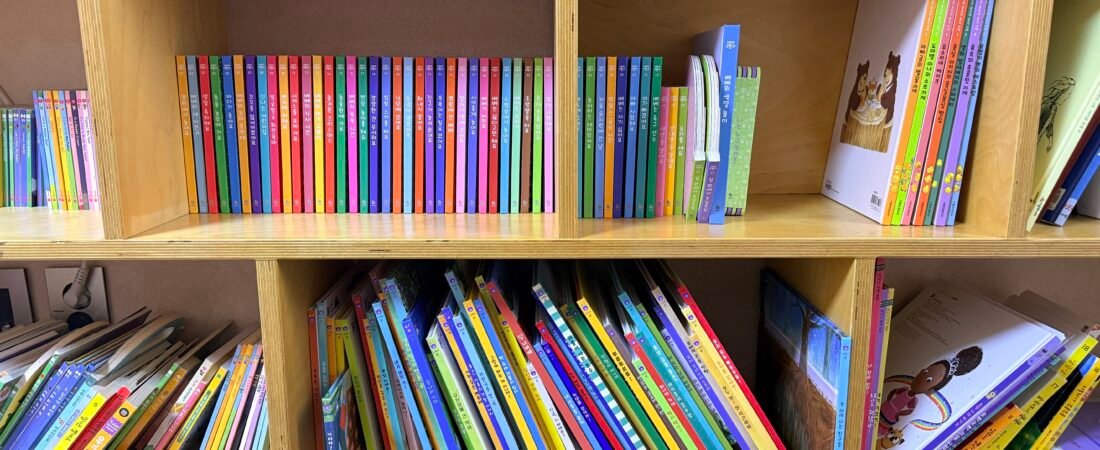
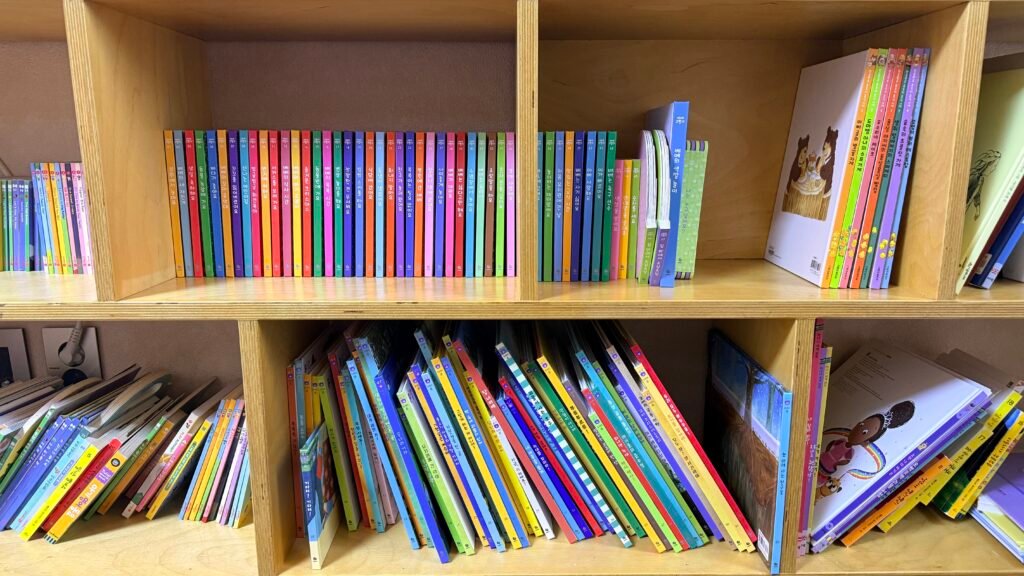
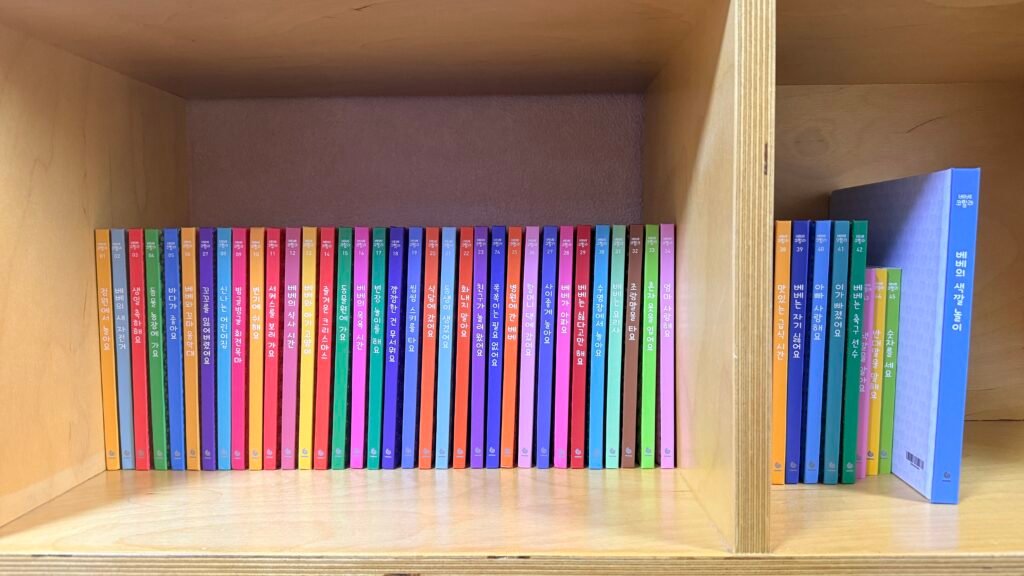
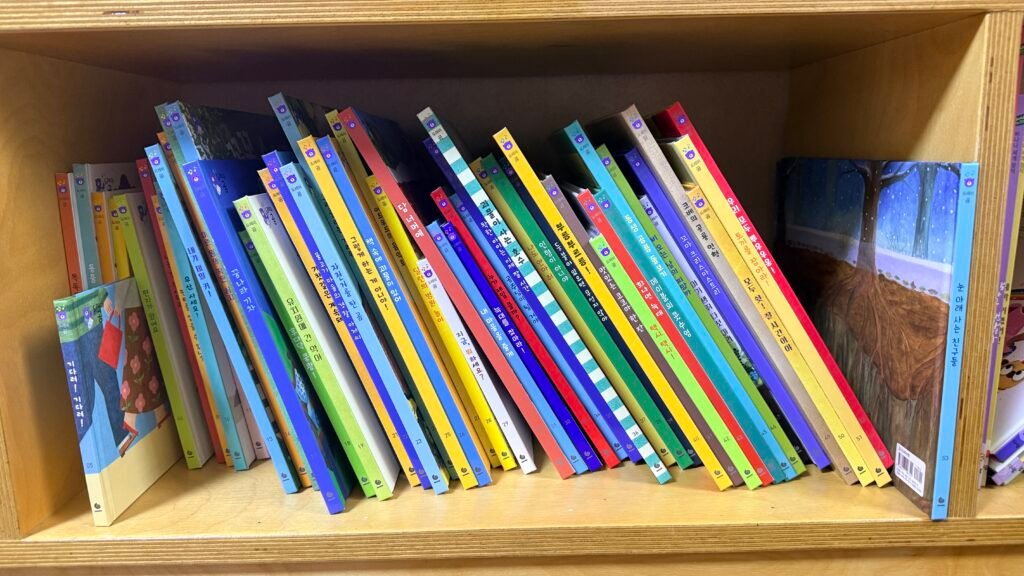
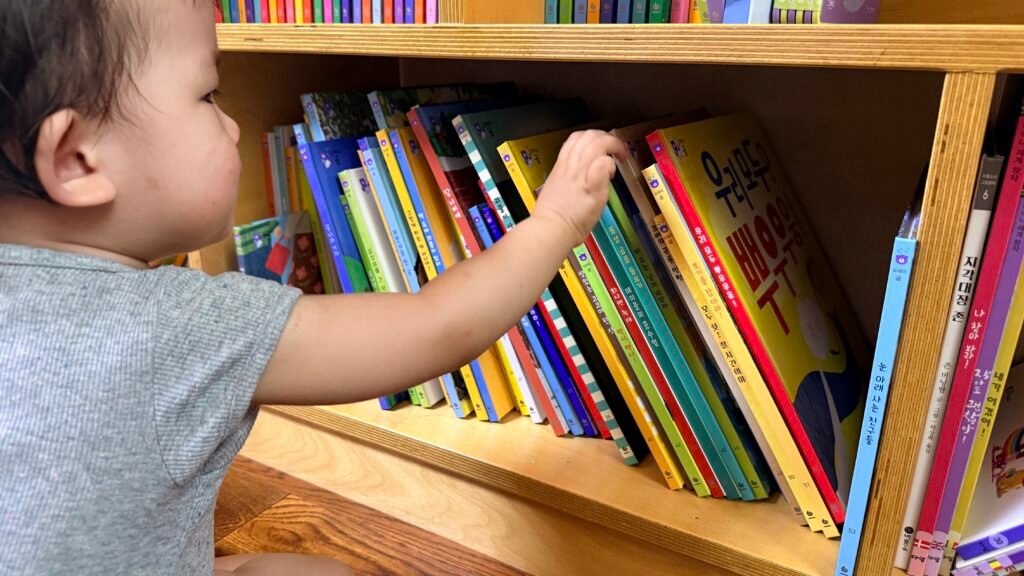
If you’re raising a baby or toddler in Korea, you’ll probably come across the word 전집 (jeonjip) sooner or later. It literally means “complete collection,” and in the world of children’s books, it refers to large sets — often 40 or 50 books at once — sold and read as a complete set rather than one book at a time.
The idea felt a little overwhelming to me at first. Fifty books, all at once, for one toddler? But once we actually started reading them at home, story after story, night after night, I began to understand exactly why these large book sets have become such a fixture in Korean parenting.
How is This Different from a Western Boxed Set?
If you’re coming from the U.S. or Europe, a jeonjip might look at first like a boxed set — think of a beloved series collected together in one box. But the logic behind it is a little different.
Western boxed sets tend to be built around one author, one character, or one story or series that unfolds across multiple books. A Korean children’s jeonjip, on the other hand, is usually organized around an age or developmental stage, and inside a single set you’ll find dozens of completely different stories touching on emotions, daily routines, science, numbers, social situations — almost like a mini library designed for one stage of childhood.
In practice, that means a parent can slot an entire age-appropriate library onto the shelf in one purchase, rather than hunting down themes one book at a time.
There’s a much bigger cultural story behind why jeonjip became such standard equipment in Korean households — the marketing, the door-to-door sales history, the social pressure around it. That’s a rabbit hole big enough for its own separate post.
So, What Are We Actually Reading at Home?
In our house, two sets get pulled off the shelf almost every single day: Doremi Bear (도레미곰) and Bebe Koala (베베코알라).
Our routine is nothing fancy. After daycare pickup, or right before bedtime, we grab one or two books from the shelf and read together on the mat — sometimes with a snack still in hand, sometimes as the very last thing we do before the lights go off.
Our child is currently 20 months old, which puts us right in Bebe Koala’s target age range and at the younger end of Doremi Bear’s. The two collections are quite different in style and feel, which — almost by accident — is exactly why they complement each other so well on our bookshelf.
Doremi Bear: A Feast for the Eyes
Doremi Bear (도레미곰) is a musical picture-book collection from Korean children’s publisher GreatBooks. The set contains 53 storybooks in total, and — true to its musical name — each book incorporates a classical piece into the reading or listening experience. The set also comes with its own CD collection: three discs of musical fairy-tale narrations and three discs featuring the original classical pieces. We sometimes play them in the background during storytime, so classical music has naturally become part of our reading routine.
The collection is divided into three developmental stages: Do, Re, and Mi. Do focuses on short, repetitive stories built around familiar, everyday subjects, while Re moves into stories with clearer narratives and more developed characters. For us, this is the stage where a picture book genuinely starts to feel like a friend — familiar enough to return to, but still interesting enough to explore again. Mi introduces more humor and imaginative elements, giving children more room to engage with the stories in their own way.
But honestly, what grabs us most isn’t the structure. It’s the artwork.
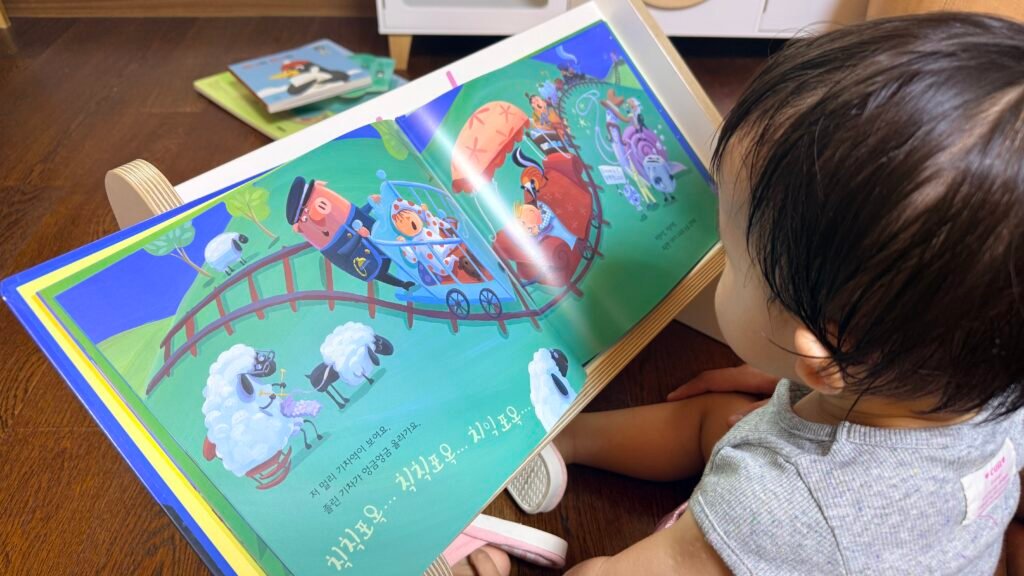
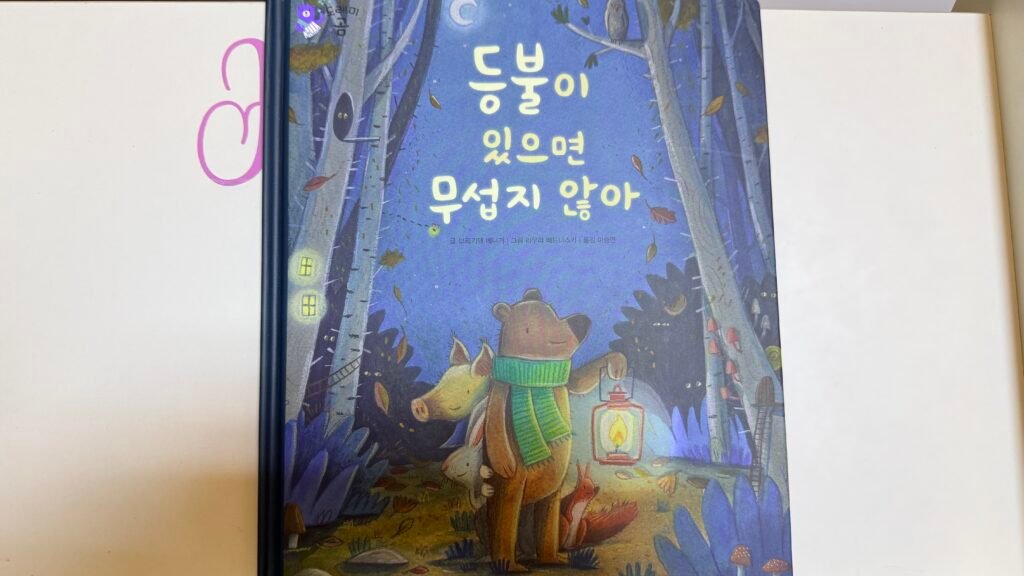
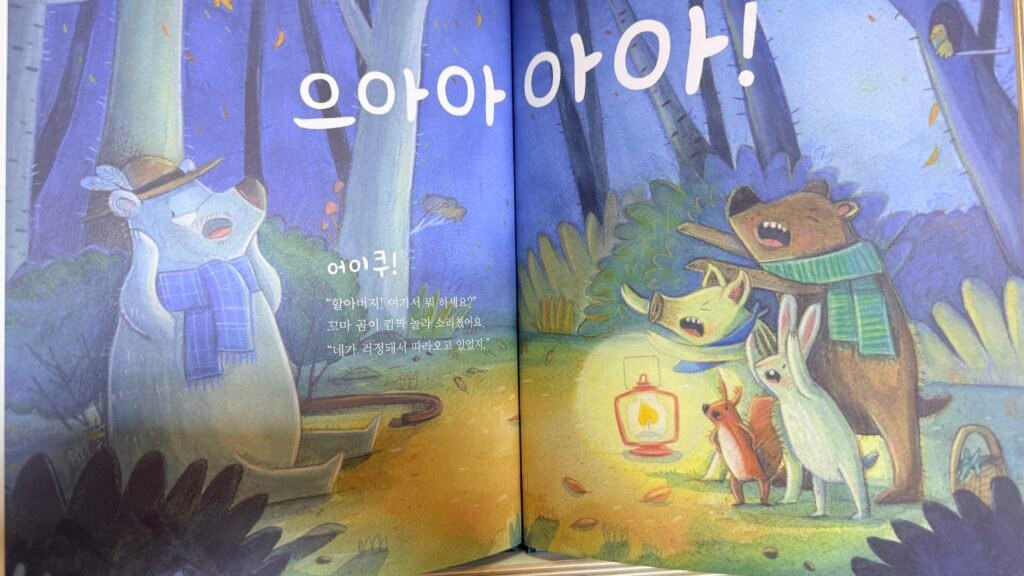
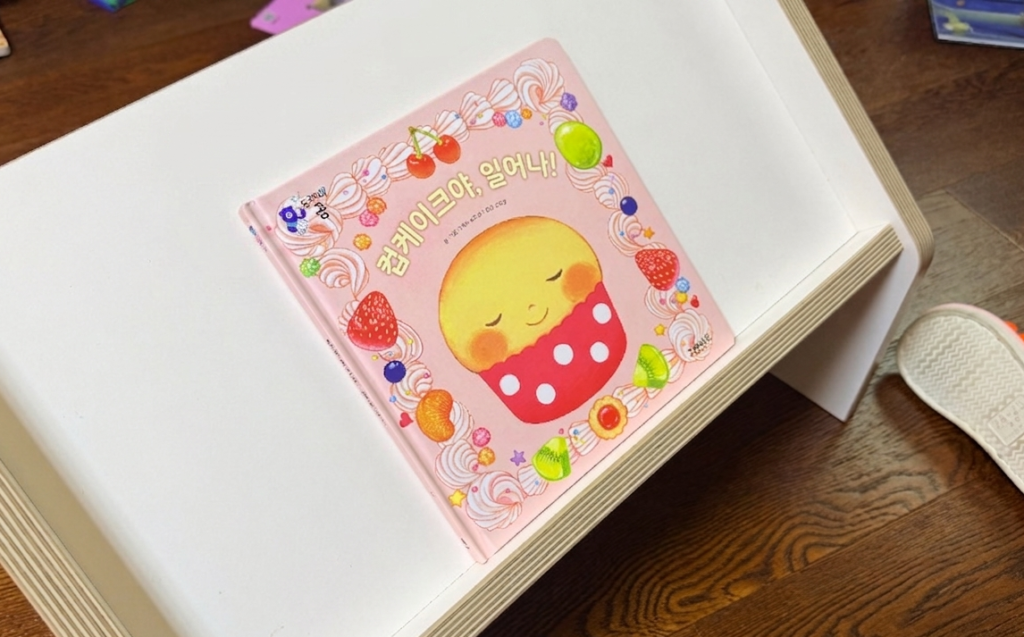
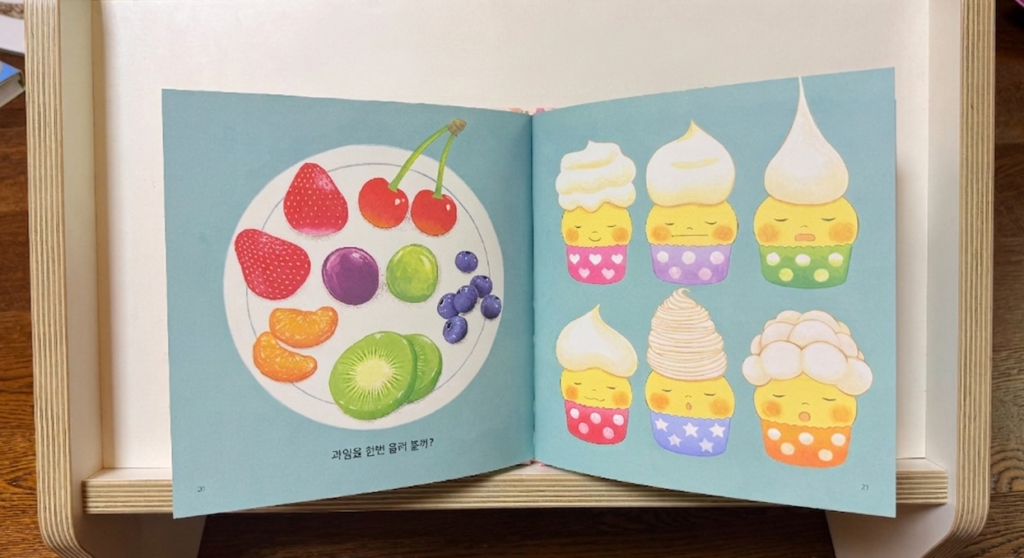
Doremi Bear features a wide range of stories and illustration styles, with contributions from a variety of writers and artists. That variety is one of the things we enjoy most about the collection. Some books make us want to linger over a page, while others immediately catch our toddler’s attention with their bright colors and lively scenes.
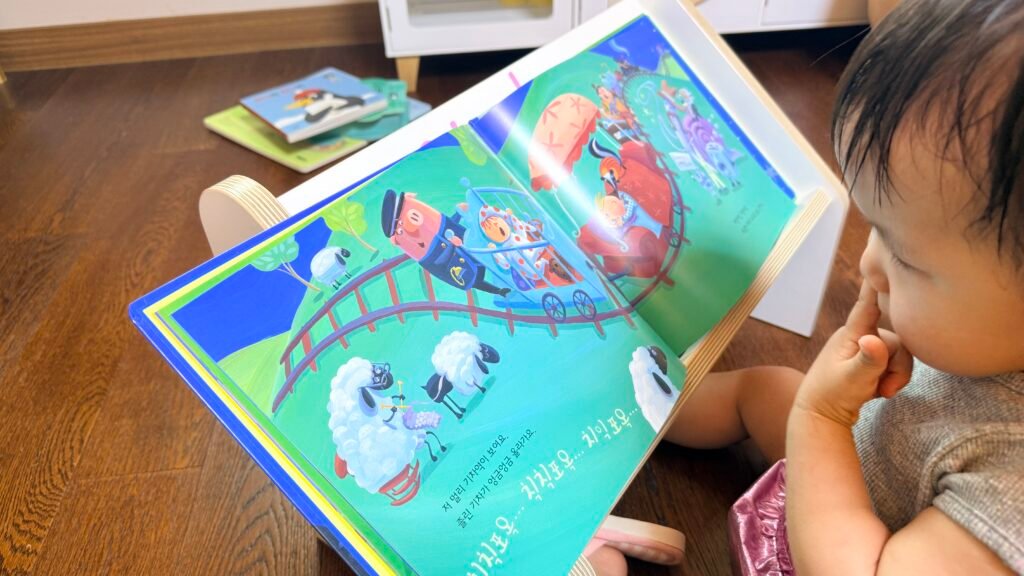
The illustration style swings wildly from one book to the next. Open one story and you’re greeted with soft, hazy, watercolor-like scenes that feel almost like a half-remembered dream. Open the next and it’s bold, saturated, and bursting with motion — characters practically leaping off the page.
That visual unpredictability seems to be exactly what hooks a toddler’s attention. In our house, Doremi Bear is very often the collection our child reaches for first, almost like flipping through a gallery where every new page is a small surprise.
Bebe Koala: A Mirror of Everyday Toddler Life
The other collection in heavy daily rotation at our house is Bebe Koala (베베코알라).
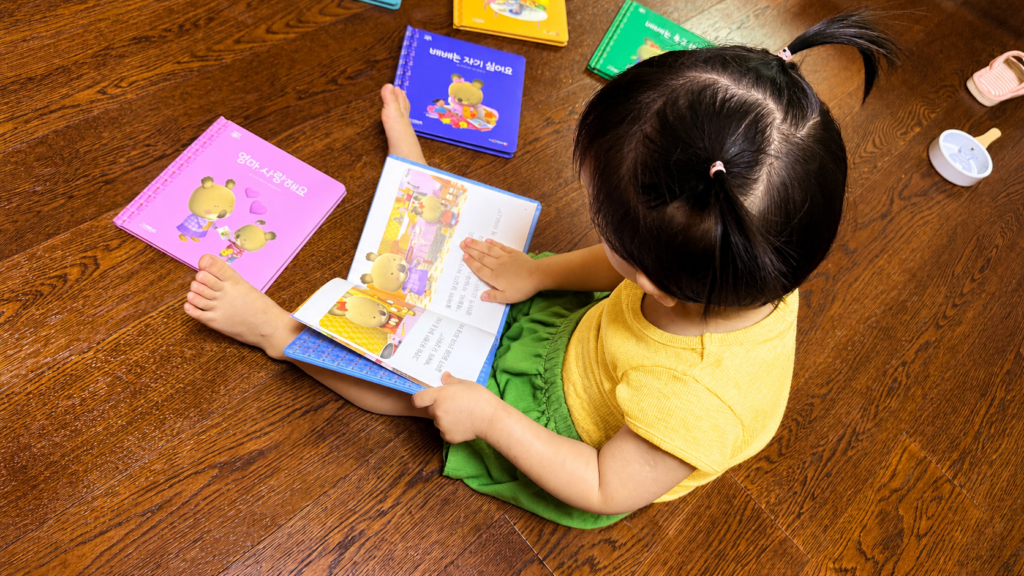
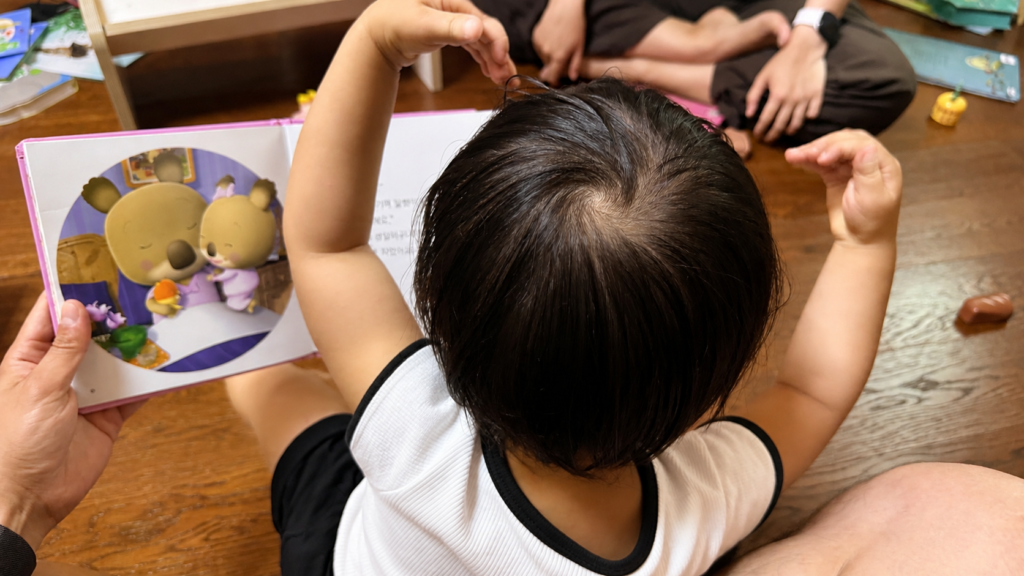
Where Doremi Bear leans into variety and visual imagination, Bebe Koala leans hard into the familiar. The main character, Bebe, goes through many of the same everyday experiences as our toddler: eating meals that don’t always go smoothly, taking a bath, resisting bedtime, making new friends, going out with family, and working up the courage to try something unfamiliar for the first time.
Because the situations are so recognizable — right down to the familiar whine of “I don’t want to!” — our toddler seems to recognize pieces of their own daily life in Bebe almost immediately. It’s not just about recognizing Bebe’s routines; sometimes our toddler seems to react to Bebe’s feelings, too. And when Bebe makes a mistake and then admits it, those little moments seem to resonate in a way that feels less like a lesson being taught and more like something quietly clicking into place.
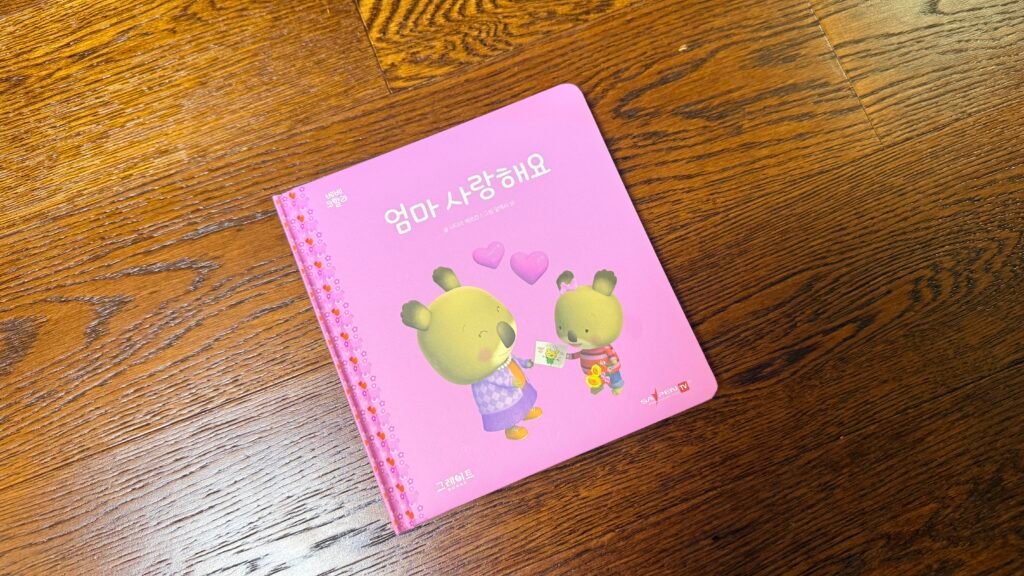
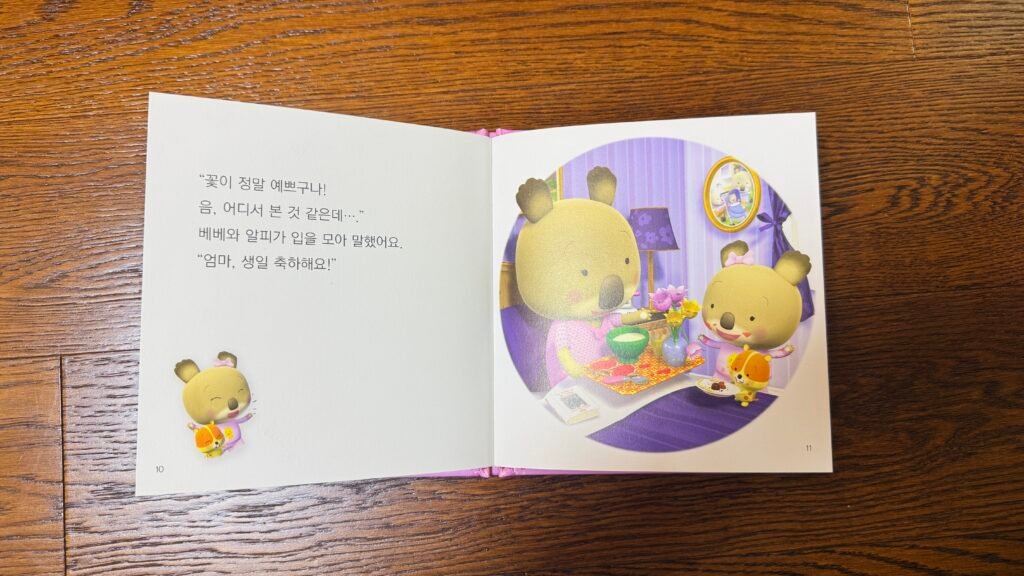
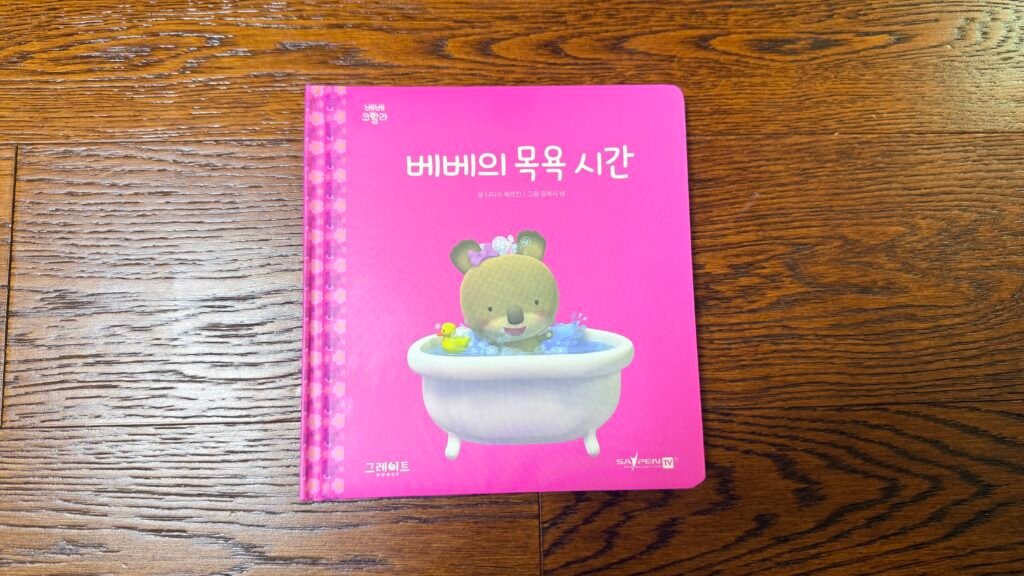
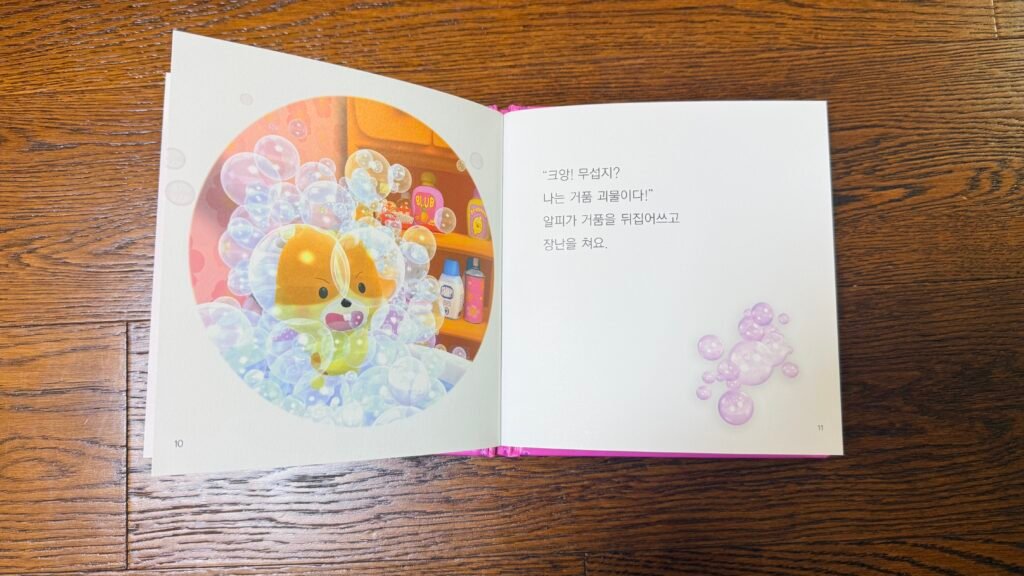
Interestingly, Bebe Koala comes from the same publisher as Doremi Bear — GreatBooks. They have very different personalities, but both come from the same publishing house.
What Our Toddler Actually Does with These Books
This is the part that turned these two sets from “a nice collection on the shelf” into something I genuinely think about.
A few months ago, our child was afraid of water — the kind of fear where just walking near a swimming pool would bring on tears. We started reading the Korean edition of Bebe Koala, including a story called “Playing at the Pool” (수영장에서 놀아요), repeatedly, night after night. In the story, Bebe is nervous about the water at first, hangs back, watches other children play, and gradually works up the courage to splash around and have fun.
Not long after, our own toddler started warming up to the pool too. Tentatively at first, then with actual enthusiasm.
I can’t honestly claim that the book caused the change — plenty of things change at once at this age. But it felt as though Bebe’s fictional nervousness gave our child a safe, story-shaped rehearsal of the same feeling: something familiar to recognize and lean on before facing the real pool. That’s when Bebe Koala stopped feeling like “just a cute set of toddler stories” to me and started feeling like a genuinely useful parenting tool.
If I had to guess which collection our toddler reaches for more often, purely by how frequently each one gets pulled off the shelf, I’d say Doremi Bear edges it out. The constantly changing illustration styles seem to keep sparking curiosity. But Bebe Koala has its own very particular kind of magnetism: the same three or four stories, requested on an endless loop.
There’s actually a well-known nickname for this exact phase among Korean parents: 베베지옥, or “Bebe Hell” — the stage when a child wants the same Bebe Koala book read again, and again, and again, long after the parent has it memorized word for word.
If that’s happening in your house too, you’re definitely not alone. 😂
A Bonus for Bilingual and International Families
One more thing worth knowing: Bebe Koala is also sold as its own English-language set — 30 main storybooks plus additional materials, separate from the Korean edition, which comes as a larger 48-book set with its own extras.
That opens up a nice option for bilingual households. You can read from the Korean set one night and the English set another, giving your child the chance to encounter familiar stories and everyday situations in both languages — even though the two editions aren’t a book-for-book match.
It’s also a low-pressure way for a parent who’s still learning Korean to pick up everyday vocabulary alongside their toddler. The sentences are short, and the context — mealtime, bathtime, playtime — often does most of the work for you.
What Age Are These Collections Really For?
According to the publisher, Bebe Koala’s Korean edition is recommended for ages 2–4, while the English edition is recommended for ages 2–6. Doremi Bear is recommended for ages 2–5.
At 20 months, our child is technically a little younger than the recommended starting age for all three. But in practice, both Korean collections have already earned a regular place on our bookshelf. Bebe Koala’s everyday scenes clicked surprisingly early, while Doremi Bear feels like a collection our toddler is gradually growing into — one book at a time, as the stories become a little longer and a little more layered.
Before You Buy a Korean Book Set
Large children’s book collections are genuinely convenient — you get an instant shelf of age-appropriate stories, and they make it easy to build a regular reading routine without constantly hunting for the next title. But there are a few practical things worth knowing before you commit to a jeonjip of your own.
- Cost and space. A full jeonjip can be a real investment, and 40–50 hardcover books take up more shelf space than you might expect. It’s worth measuring your shelf before you buy.
- Not every book will be a hit. Buying 50 books doesn’t guarantee your toddler will love all 50. There’s a good chance you’ll end up reading the same five favorites over and over for months.
- Secondhand is completely normal here. Because of the cost, buying used jeonjip sets is very common in Korea. If you go this route, check that all the books are included and that extras such as CDs, audio players, activity booklets, or parent guides are still there. These extras are often the first things to go missing.
- Where to buy new. For a brand-new set, check the publisher’s official website or an authorized reseller. Korean children’s book collections are often sold differently from ordinary retail books, so don’t be surprised if you can’t find a full set sitting on a shelf at a general bookstore. Many are sold as complete sets through dedicated online stores or direct sales channels.
- Your Korean doesn’t need to be perfect. Many toddler collections rely heavily on illustrations, repetition, and familiar everyday situations, so they can still be enjoyable — and useful — even in households where Korean isn’t the parents’ first language.
So, Is a Jeonjip Actually Worth It?
I don’t think you need a giant book collection to raise a kid who loves books. For us, the real value was never “50 books because 50 books sounds impressive.” It’s having enough variety on the shelf that our toddler can choose whatever feels interesting on a given day.
Some days, that’s a Doremi Bear story we haven’t read much yet, with illustrations that still feel mostly new. Other days, it’s the exact same Bebe Koala book we’ve already read five times that week — word for word, no skipping allowed.
At 20 months old, I think that’s probably the best review either collection could get.
Curious why these oversized children’s book collections are such a fixture in Korean households? I’m planning a separate deep dive into Korea’s jeonjip culture — why parents buy them, how they’re actually sold, and how the whole system differs from children’s boxed sets elsewhere.
Leave a Reply