Updated: August 2026
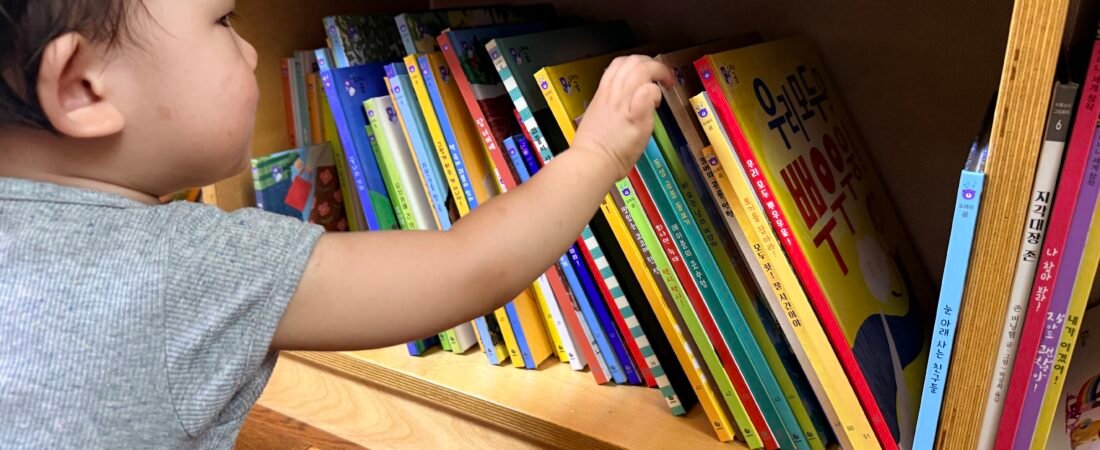
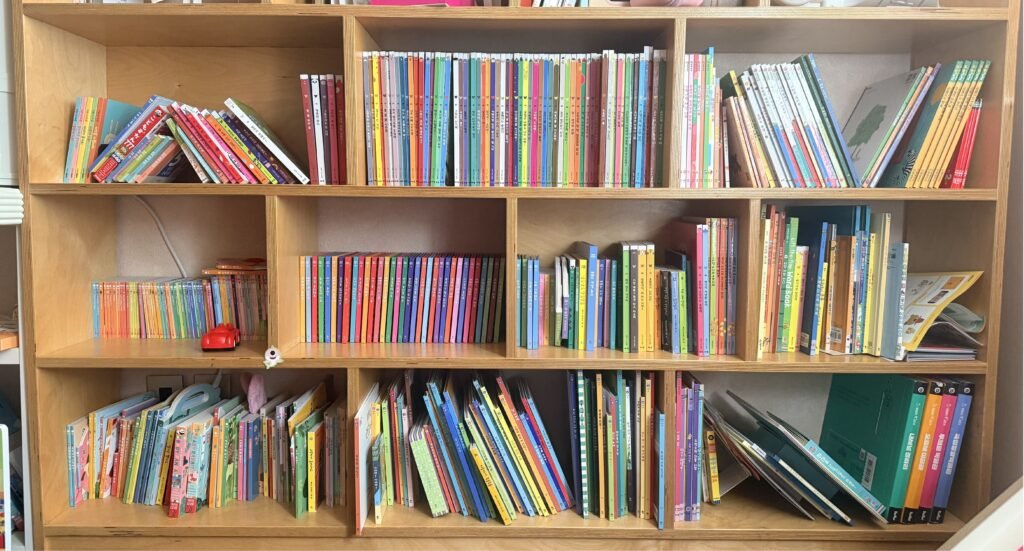
If you’ve ever visited a Korean home with a young child, you’ve probably noticed it: an entire wall — sometimes floor to ceiling — filled with matching, color-coded children’s books. That’s not a fluke or a book-lover’s obsession. It’s a jeonjip (전집), and it’s one of the most distinctly Korean parts of raising a kid here.
As a parent living in Korea, I’ve bought three of these sets myself, so this post isn’t just theory — it’s what actually sits (and has sat) on our shelf as my own child has grown.
What Exactly Is a Jeonjip?
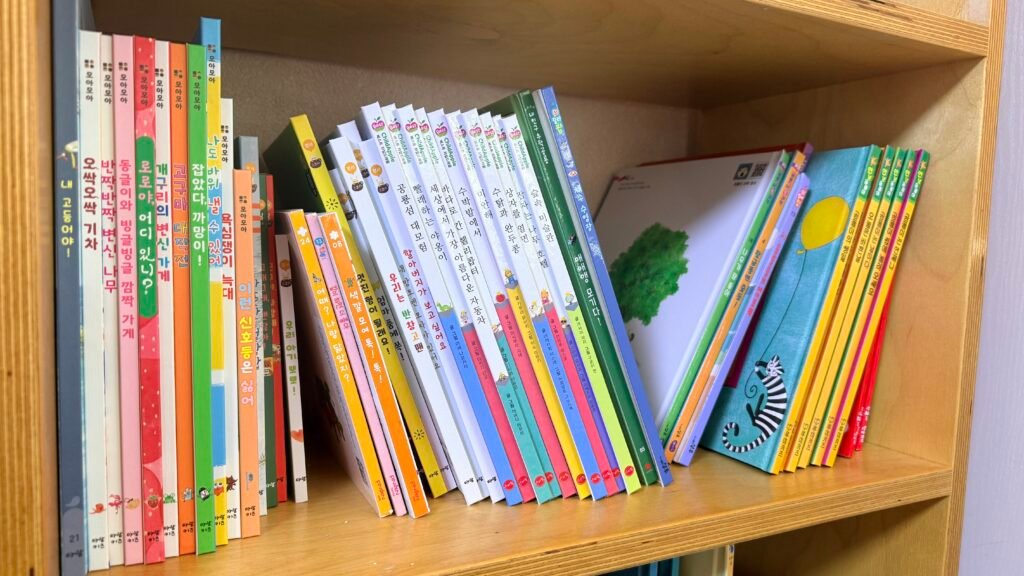
A jeonjip is a themed collection of children’s books sold as one complete package rather than as individual titles. Where a parent abroad might pick up one or two picture books at a time, Korean publishers sell entire curricula: 20, 50, sometimes over 100 books in a single set, organized by subject (science, folk tales, nature, emotions, math) or by age range (0–3, 4–6, and so on).
Think of it less like “a stack of books” and more like a pre-built home library, curated from cover to cover by a publisher instead of assembled title-by-title by a parent.
Why Korean Parents Buy Books in Sets Instead of One at a Time
A few different factors come together to make jeonjip such a familiar part of children’s book shopping in Korea.
Wanting to cover everything, systematically.
Some Korean parents like the idea of exposing their children to a subject in a structured and comprehensive way rather than choosing books one at a time. A science jeonjip, for example, might cover everything from space and insects to the human body. Buying individual books can sometimes create the feeling that something important might be missing — especially when a publisher has already organized an entire collection for a particular age or topic.
Peer pressure and a little FOMO.
This is probably more influential than it might seem from the outside. In Korean parenting communities, online forums, and mom cafés, recommendations for particular book sets can spread quickly. When you visit another family’s home and see an entire jeonjip on the bookshelf, it can be hard not to wonder, “Does my child need this too?” For some parents, that sense of reassurance — knowing that other families are buying the same set — can be part of the appeal.
Strong marketing and word-of-mouth.
Jeonjip are often marketed as complete educational packages rather than simply collections of books. Parents may encounter them through online parenting communities, bookstores, department stores, promotional events, or consultations. Some sellers also offer installment payment options, making a relatively large purchase feel more manageable. Depending on the collection, the package may include extras such as an audio pen, activity materials, flashcards, or educational toys, which can make the whole package feel like more than “just books.”
Korea’s intense education culture.
Underneath all of this is a broader cultural emphasis on giving children learning opportunities from an early age. For some parents, reading is not only about stories and entertainment; it can also be seen as a way to support language development, general knowledge, and preparation for later learning.
These factors don’t mean that every Korean parent buys jeonjip — far from it. But together, they help explain why buying dozens of children’s books at once has become such a familiar sight in Korea.
How Many Books Are Usually in a Jeonjip — and What They Cost
Jeonjip can vary dramatically in size, depending on the publisher, age group, and type of collection. Some sets contain around 20 books, while larger collections can include 50, 80, or even more than 100.
The price varies just as much.
To give you a real-world example, here are the three jeonjip sets my family has purchased:
Doremi Gom (도레미곰)
53 books · ₩434,000 (~$320 USD)
Doremi Gom is a story-focused picture book collection designed to introduce young children to a wide range of stories and reading experiences. The books have a warm, gentle feel, and many of them worked well for us as bedtime reading.
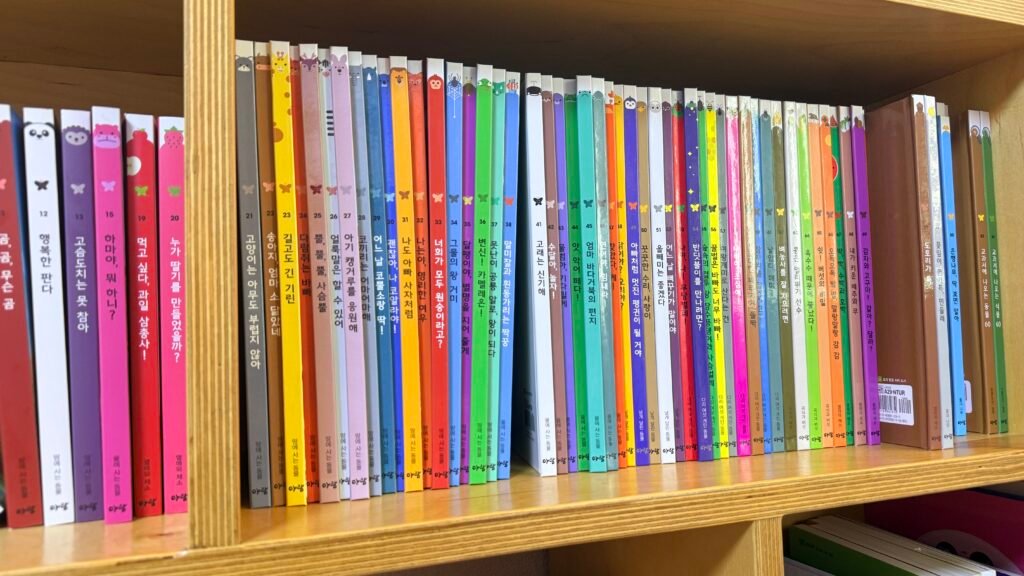
Bebe Koala (베베코알라)
48 books · ₩388,000 (~$290 USD)
Bebe Koala focuses on everyday life from a young child’s perspective — routines, emotions, family life, and the small experiences that children encounter as they grow. The stories are simple and relatable, which made the set easy to incorporate into our everyday reading routine.
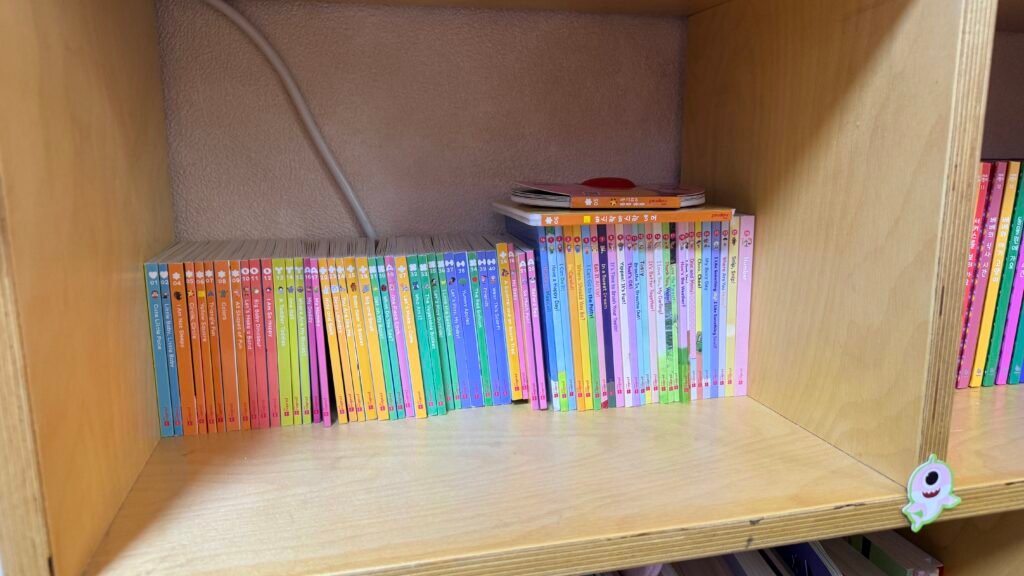
FINDEN BEBE (핀덴베베)
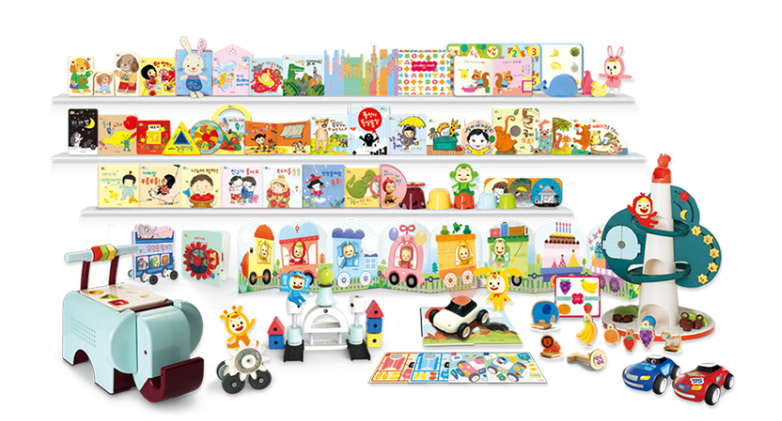
35 picture books + 8 toys + FINDEN Car + parent guide · ₩645,000 (~$480 USD)
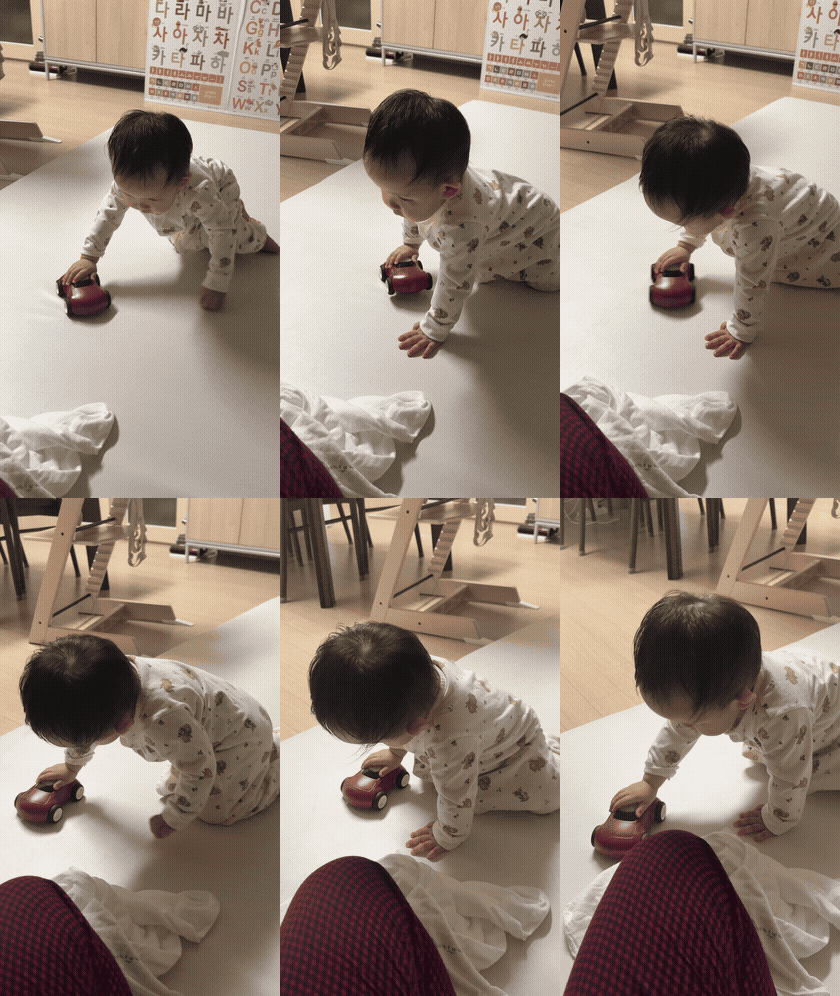
FINDEN BEBE was the earliest of the three sets we purchased. It is designed for children aged 0–3, and we bought it when our child was just 3 months old. We used it particularly heavily until around 18 months.
Unlike the other two collections, FINDEN BEBE came with a substantial number of additional materials, including toys and a dedicated “FINDEN Car,” which is one reason its total price was considerably higher.
So, How Expensive Is a Jeonjip?
Looking at my own three purchases gives you a better idea of the range: our sets cost between ₩388,000 and ₩645,000.
The price is influenced not only by the number of books, but also by the age group and what is included in the package. A book-focused collection may cost several hundred thousand won, while a more elaborate early-childhood package with toys and other educational materials can cost significantly more.
That may sound expensive for children’s books — and honestly, it can be.
But this is also why the Korean secondhand market for jeonjip is so active, which we’ll come back to later.
An example of a Korean children’s book set with books, toys, and educational materials.
Where Korean Parents Buy Jeonjip
Buying a jeonjip in Korea can work a little differently from buying ordinary children’s books. Instead of simply adding a boxed set to an online shopping cart, parents may go through a sales representative or a special promotion.
Here are some of the most common ways families buy them:
Promotional Events at Department Stores
Publishers sometimes hold promotional events or sales booths at department stores and other large retail spaces.
The interesting thing is that the promotion is not always a simple discount on the book set itself. Parents may pay the regular price and receive free gifts or bonus products instead — such as baby products, educational toys, or even a smaller companion book set.
And yes, getting an additional book set as a “free gift” can sometimes make the original purchase feel even more tempting!
Through the Publisher’s Website
Some publishers do not sell their larger book sets through a standard online checkout.
Instead, parents may submit a purchase consultation request. The form may ask for basic information about the child, a preferred contact date, and a phone number. A sales representative then contacts the parent and explains the available collections and purchasing options.
In some cases, the actual transaction is handled through a bookstore or sales partner rather than directly through the publisher.
These consultations may also come with promotional gifts, such as baby products or an additional book set.
For someone unfamiliar with the Korean children’s book market, this process can feel quite different from simply choosing a few picture books online.
The Secondhand Market
And then there is the Korean secondhand market, which is extremely active for children’s book sets.
Because jeonjip can be expensive and children eventually outgrow their collections, many families sell their used sets to other parents through local secondhand platforms.
This is such a common part of the jeonjip ecosystem that it deserves a closer look on its own.
Why Some Jeonjip Sets Are Surprisingly Expensive
A few hundred thousand won for children’s books can be a shock at first. But with jeonjip, you’re usually paying for more than the books themselves.
Many sets come with an audio pen that reads the books aloud when a child taps a page, along with play tools, stickers, fold-out or accordion-style books, activity materials, and other physical extras designed to make the collection feel like a complete learning kit rather than simply a shelf of books.
Our FINDEN BEBE set is a good example. The ₩645,000 price included 35 picture books, 8 toys, a “FINDEN Car,” and a parent guide book. That helps explain why an infant-focused set can actually cost more than another collection containing far more books.
In other words, with a jeonjip, the number of books isn’t necessarily what determines the price. The age group, publisher, educational concept, and number of included materials can all make a significant difference.
Do Korean Children Actually Read All of Them?
Honestly? Not every single book gets equal attention. And that’s completely normal.
Most children gravitate toward a handful of favorites and ask to read those books again and again, while other titles in the collection can sit quietly on the shelf for weeks or even months.
That’s certainly been our experience.
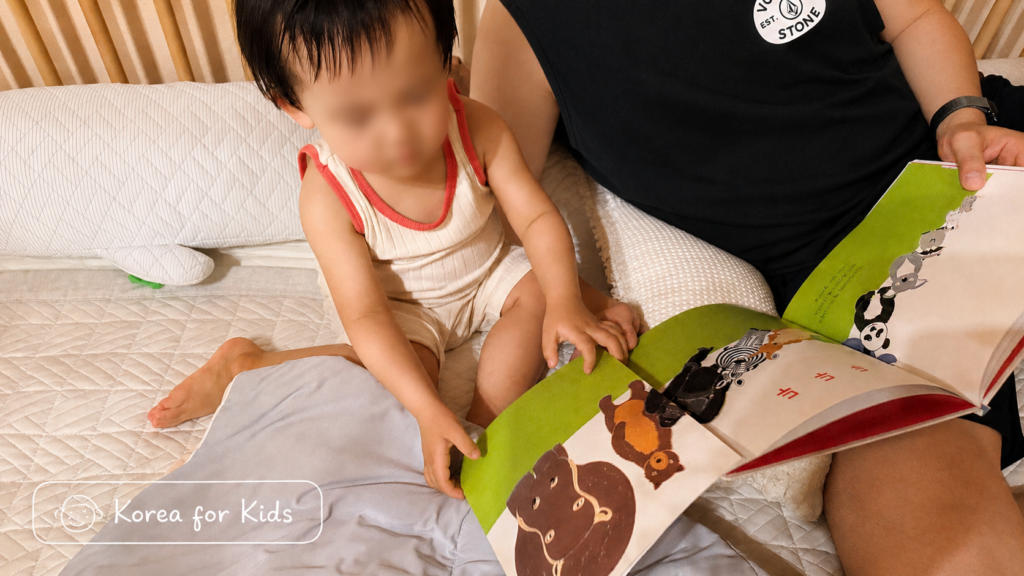
Our 20-month-old genuinely loves both Doremi Gom and Bebe Koala and regularly brings books to us to read. But there’s a clear pattern to when each set gets picked up.
Bebe Koala, with its stories about everyday toddler life, tends to come out during the day. Doremi Gom, with its warmer and more classic-feeling stories, has become more of a bedtime favorite.
So while our child certainly isn’t reading all 101 books from those two sets on a regular basis, both collections are genuinely in active rotation. They’re not simply sitting on the shelf to make our living room look educational.
Our FINDEN BEBE set tells a slightly different story. We bought it when our child was just 3 months old, and it got heavy, almost daily use through around 18 months. By 20 months, however, our child had largely moved on to the two age-appropriate sets above.
And that’s one of the interesting things about jeonjip: many collections are designed around a particular age window. A set that feels perfect for a six-month-old may eventually become too simple for a toddler, which is one reason Korean families often sell, store, or pass their old sets on to another family.
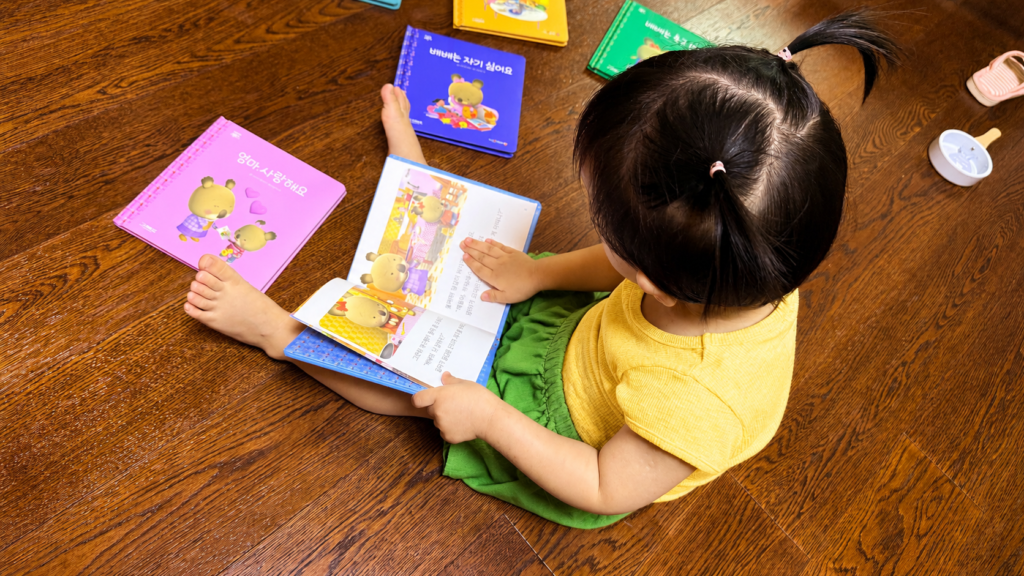
Bebe Koala
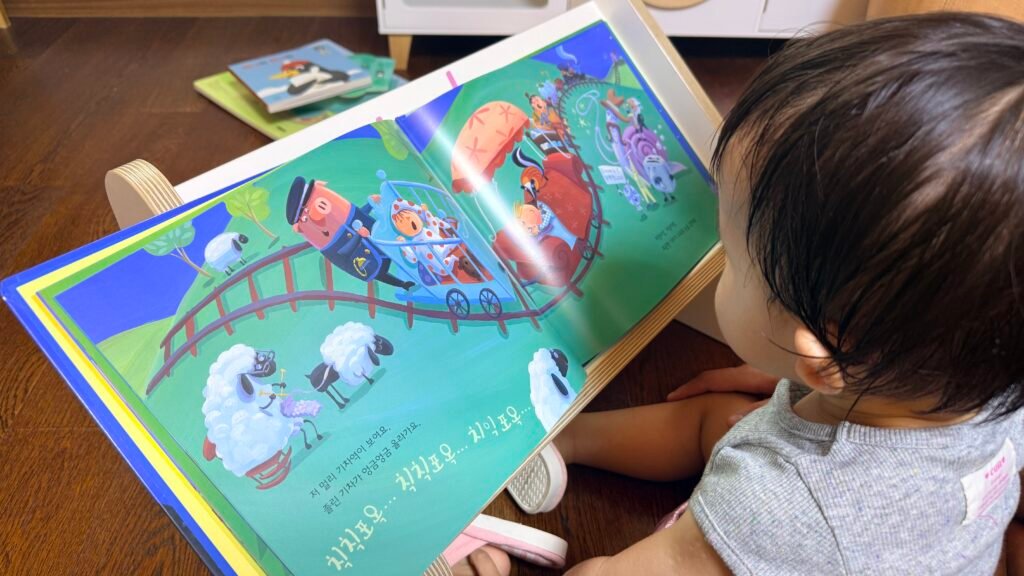
Doremi Gom
Jeonjip vs. Buying Individual Picture Books
So, is it better to buy an entire jeonjip or choose individual picture books one at a time?
There isn’t one right answer. The biggest difference is convenience versus flexibility.
| Jeonjip (Book Set) | Individual Picture Books | |
|---|---|---|
| Curation | Done for you by age or topic | You choose each title yourself |
| Upfront cost | High | Low per book |
| Coverage | Broad and systematic | Selective and interest-driven |
| Extras | Often includes audio pens, toys, or activity materials | Usually just the book |
| Resale | Active secondhand market | Usually harder to resell individually |
A jeonjip can be appealing if you want a ready-made children’s library without having to research hundreds of individual titles yourself.
Buying individual books, on the other hand, lets you follow your child’s interests more closely. You can buy a few books about dinosaurs because your child is suddenly obsessed with dinosaurs — and then move on to trains, animals, or anything else that catches their attention.
For many families, the best approach may actually be a combination of both.
The Secondhand Market: Why So Many Families Buy Used Jeonjip
One of the most interesting parts of Korea’s jeonjip culture is the active secondhand market.
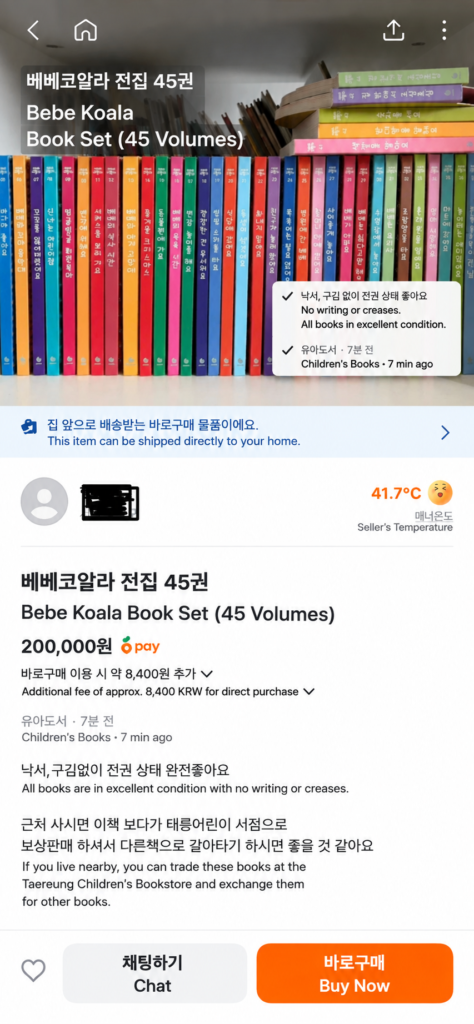
Local resale platforms such as Karrot Market (당근마켓) make it relatively easy for parents to sell children’s book sets that their children have outgrown and for other families to buy them at a much lower price.
I personally bought all three of our jeonjip sets new through official sales channels at the full retail price. But I also understand why so many parents choose the secondhand route.
There are several practical reasons:
- It’s significantly cheaper. Used sets can cost much less than buying the same collection new, especially when the books are still in good condition.
- Children eventually outgrow them. Jeonjip are often designed for a particular age range, so a collection that was once a daily favorite may eventually become too easy. Instead of leaving an expensive set unused, families can pass it on to someone with a younger child.
- You may not need all the extras. New collections often come with toys, stickers, posters, activity materials, and other bonuses. Some families use these heavily, while others barely touch them. With a secondhand set, parents may be able to focus on getting the books themselves without paying as much for a complete new package.
- It’s better than simply throwing the books away. A book set that no longer fits one child’s age can still be useful to another family.
So buying used isn’t necessarily just about getting something cheap. For many Korean parents, it’s a practical way to make an expensive book collection more affordable while keeping the books in circulation.
Do You Actually Need a Jeonjip If You’re Raising a Child in Korea?
Not necessarily.
Jeonjip are common in Korea, but they’re certainly not mandatory. And buying a huge book collection doesn’t automatically mean your child will become a better reader.
Some families prefer the convenience of having an entire age-appropriate library at home. Others would rather take their children to the local library or bookstore, let them browse the shelves, and choose books based on whatever catches their attention that day.
There is also something to be said for letting a child discover what they actually like instead of trying to cover every possible topic in advance.
If you like the idea of systematic, all-in-one coverage and don’t want to spend hours researching individual books, a jeonjip can be a genuinely useful investment. The active secondhand market can also make the initial cost less intimidating.
If you’d rather build your child’s library slowly around their interests, individual picture books can work just as well — and they require much less money upfront.
You don’t need a jeonjip to raise a child in Korea. It’s simply one very Korean way of building a children’s library.
Frequently Asked Questions
What exactly is a jeonjip?
A jeonjip (전집) is a curated collection of children’s books sold together as one complete set, often organized around a particular age group, subject, or educational theme. Sets can contain anywhere from a few dozen books to more than 100.
Why do Korean parents buy books in sets?
There are several reasons: parents may want systematic coverage of a topic, appreciate the convenience of a ready-made collection, be influenced by recommendations from other parents, or feel that a large home library provides a good learning environment for their child.
How many books are usually in a set?
There is no fixed number. Many collections contain around 20–50 books, while larger sets can go well beyond 100. Some also include toys, audio pens, activity materials, or other extras.
Where do Korean parents buy jeonjip?
Common routes include department-store promotional events, publisher-linked sales consultations, and secondhand marketplaces such as Karrot Market (당근마켓).
Why are some jeonjip sets surprisingly expensive?
Because you’re often paying for more than the books. Audio pens, toys, activity materials, parent guides, and other educational extras can be bundled into the package, and some collections are heavily curated around a particular developmental stage.
Do Korean children actually read all of them?
Usually not equally. Children tend to develop favorites and return to them repeatedly, while other books may sit untouched for a while. That’s completely normal — and it doesn’t necessarily mean the entire set was a waste.
Jeonjip vs. buying individual picture books — which is better?
Neither is universally better. Jeonjip offer convenience, systematic coverage, and a ready-made library, while individual books give parents more flexibility to follow a child’s changing interests and keep upfront costs lower.
Do you actually need a jeonjip if you’re raising a child in Korea?
No. Jeonjip are common, but they’re optional. Many families combine them with library visits and individually chosen books, while others don’t buy sets at all.
Leave a Reply