
Korean Birthday Traditions & Postpartum Culture in a Single Bowl
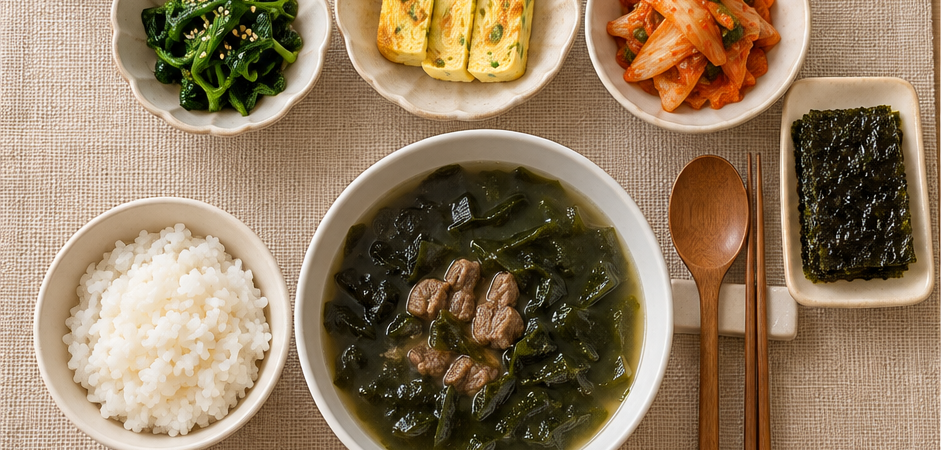
When you think of birthdays, cake and presents probably come to mind first. But in Korea, a special soup always finds its way onto the morning birthday table: Miyeok-guk (Seaweed Soup).
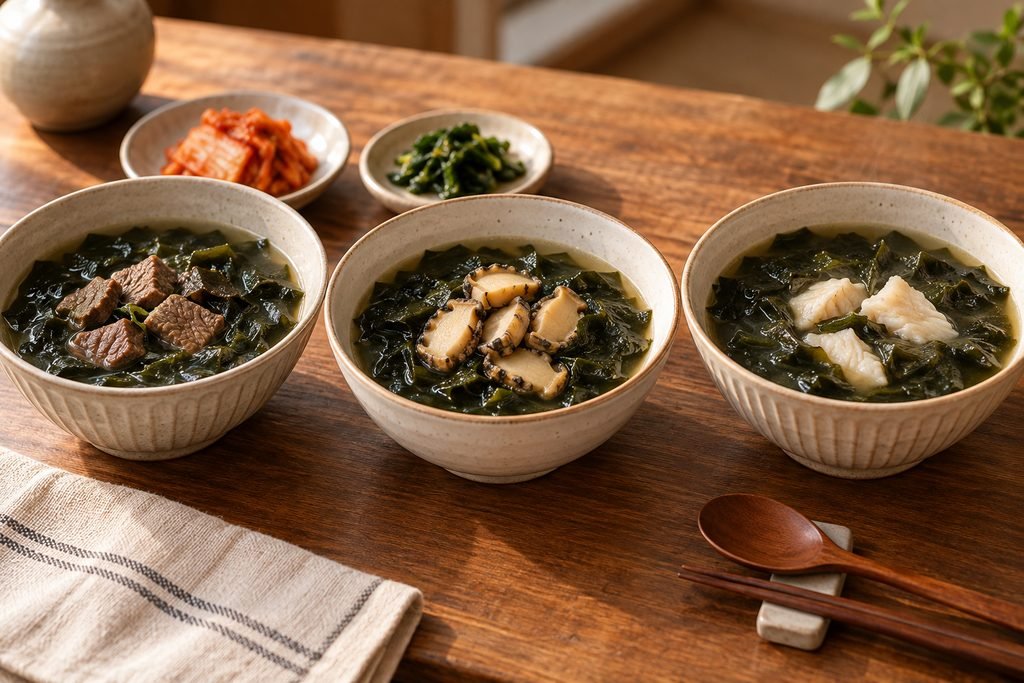
Miyeok-guk is a traditional Korean soup made with miyeok—an edible sea vegetable harvested from the ocean. The most classic version is Beef Seaweed Soup (Sogogi Miyeok-guk), made by stir-frying soaked seaweed and tender beef in rich sesame oil, then simmering it with soup soy sauce. It features a unique, tender texture with a deep, comforting, savory broth. Depending on the region or household, beef can be swapped for seafood like abalone, flounder, mussels, or oysters.
In Korea, miyeok-guk isn’t just an everyday meal—it carries deep symbolic meaning tied to birth, birthdays, and traditional postpartum care.
So why exactly do Koreans eat seaweed soup on their birthdays? To uncover the story, we first need to look at how Korean mothers have nourished themselves with this soup for generations.
1. Why Do New Mothers Eat Seaweed Soup?
① Traditional Korean Postpartum Care (Sanhujori)
In Korea, there is a long-standing tradition of serving seaweed soup to mothers after childbirth. The goal was to help the body recover, replenish energy, and regain vitality after giving birth.
Traditionally, a new mother would eat miyeok-guk for four to six meals a day during the first 21 days after delivery (a period known as se-ire or samchil-il). While exact customs vary by era and region, the core sentiment remains the same.
Miyeok-guk was more than just physical nourishment—it was also part of sacred rituals praying for a safe delivery and the newborn’s health.
② Samshin-sang and the First Meal (Cheot-gukbap)
In traditional Korean folk beliefs, Samshin (often called Samshin Halmoni or Grandma Samshin) is a deity who grants babies, assists with childbirth, and protects growing children. Legend even says that the blue Mongolian spot on a newborn’s bottom comes from Grandma Samshin gently patting the baby out into the world!
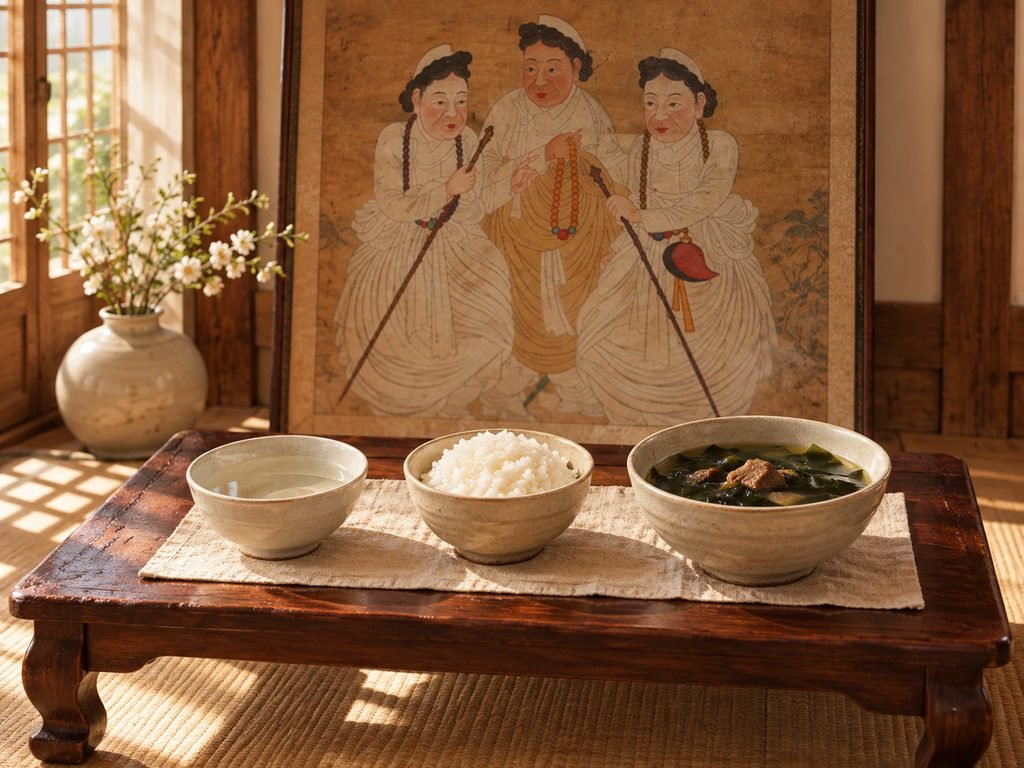
After a baby was born, families set up a ritual table called Samshin-sang to give thanks for the safe delivery and pray for the health of both mother and child. This table typically featured fresh water (jeonghwasu), cooked rice, and miyeok-guk.
Unlike typical ritual foods that are shared among family members, the rice and seaweed soup from the Samshin-sang were reserved exclusively for the mother. This sacred first meal after giving birth was called Cheot-gukbap. Because Samshin was believed to watch over children as they grew, similar rituals featuring miyeok-guk continued on milestone days like the 100th day (Baek-il), the 1st birthday (Dol), and subsequent birthdays.
③ The Nutritional Benefits of Seaweed
Why seaweed, of all ingredients? While ancient reasons were rooted in tradition, modern nutrition explains why it was such a smart choice:
- Rich in Minerals & Vitamins: Miyeok is packed with calcium, iron, iodine, and over 40 essential minerals, along with dietary fiber like alginate.
- Digestive & Heart Health: Alginate gives seaweed its smooth texture, aids digestion, prevents constipation, and helps flush out excess cholesterol.
- Essential Iodine: Seaweed is a naturally rich source of iodine, an essential mineral for thyroid function—especially important during pregnancy and breastfeeding.
(Note: While traditional customs encouraged eating seaweed soup several times a day, modern health guidelines recommend moderate consumption—about twice a day during postpartum recovery—to keep iodine intake at a healthy level!)
2. From Postpartum Care to Birthday Celebrations
How did a dish made for new mothers become Korea’s ultimate birthday food?
Rather than focusing on a single historical origin, it helps to look at the emotional meaning Koreans place on birthday seaweed soup today.

Remembering a Mother’s Love and Sacrifice
On your birthday in Korea, eating miyeok-guk isn’t just about celebrating yourself—it’s a heartfelt nod to your mother. It serves as a gentle reminder of the pain, sacrifice, and love she went through to bring you into the world.
Your birthday marks the day you were born, but it is also the day your mother endured labor to welcome you. Eating a bowl of seaweed soup connects your birth to the love and care that nourished you from day one.
Even today, it’s very common to cook miyeok-guk for parents or parents-in-law on their birthdays as a sign of love and respect. You’ll also often hear friends or family ask each other on their special day: “Did you eat miyeok-guk today?”
3. Birthday Seaweed Soup in Modern Daily Life
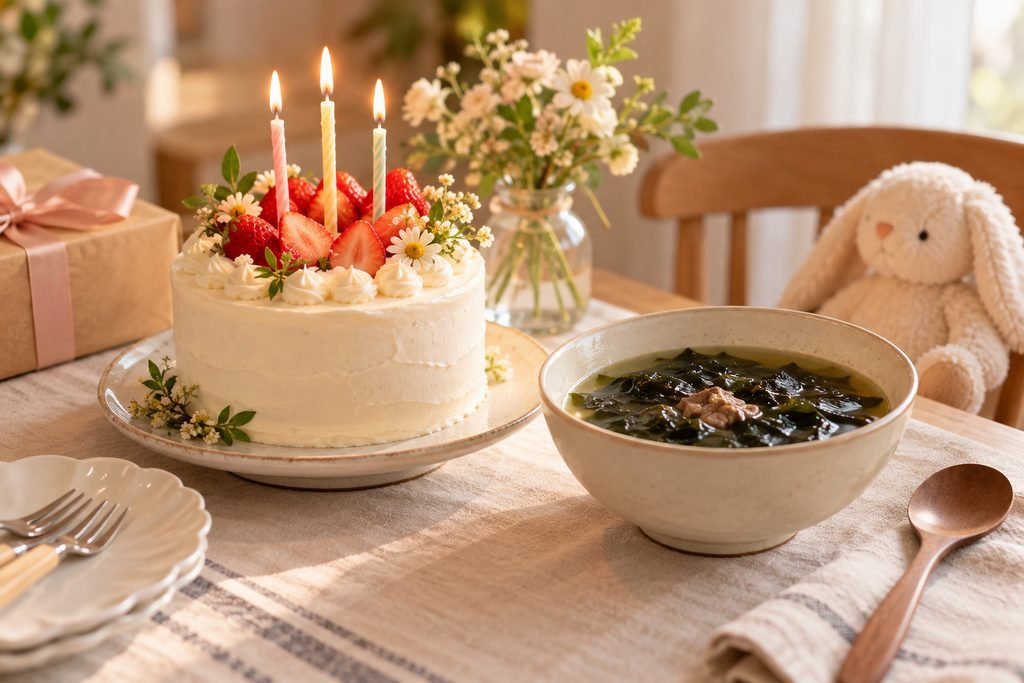
Today, birthday seaweed soup remains a steadfast part of everyday life in Korean households. Many start their special day with a bowl of seaweed soup prepared by family members, or cook it themselves to celebrate.
Whenever it’s my parents’ or parents-in-law’s birthdays, I always wake up early to cook and set a birthday breakfast table. I still vividly remember making a homemade bowl of miyeok-guk for my father-in-law for the very first time after getting married.
When it comes to ingredients, beef is by far the most classic choice, which is my absolute favorite. Seafood variations like abalone or flounder are also very popular. On the flip side, putting chicken or pork in miyeok-guk is extremely rare—if someone did that, people would probably find it quite unusual!
Beyond family, you’ll often hear Koreans casually ask friends or spouses, “Did you eat miyeok-guk today?” It’s a warm, culturally ingrained way of asking, “Is it your birthday today?” while sending congratulations.
Of course, not everyone eats seaweed soup on their birthday these days. Some prefer celebrating with cake and dining out, while others skip special birthday foods altogether. But even as modern customs evolve, miyeok-guk remains the ultimate symbol of a Korean birthday.
4. Fun Korean Expression: “Eating Seaweed Soup” (미역국을 먹다)
Did you know miyeok-guk also has a playful place in the Korean language?
The phrase “미역국을 먹다” (miyeok-guk-eul meok-da) literally means “to eat seaweed soup,” but idiomatically, it means “to fail an exam” or “to get rejected.”
Because seaweed is slippery, people humorously connected it to “slipping” or failing a test! For this reason, students and job seekers usually avoid eating seaweed soup on exam or interview days, opting instead for sticky rice cakes (chapssaltteok) or traditional taffy (yeot) to make their good luck “stick.”

Wrapping Up: A Story in Every Bowl
In Korea, a simple bowl of warm miyeok-guk on your birthday is more than just breakfast. It carries deep traditions of childbirth, health, family bonds, and maternal love.
The next time you enjoy a bowl of Korean seaweed soup—whether on your birthday or just a rainy afternoon—you’re getting a taste of a beautiful tradition that honors life, love, and family.
Leave a Reply