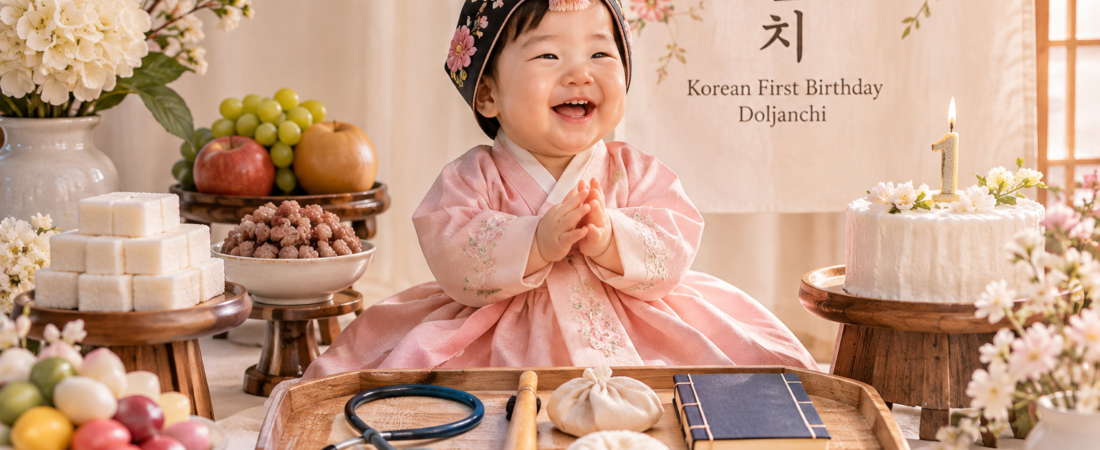
In Korea, a baby’s first birthday is much more than an ordinary birthday. It is a special family occasion filled with traditional food, beautiful outfits, carefully decorated tables, and celebrations shared with loved ones.
In Korean, a baby’s first birthday is called dol (돌), and the celebration is known as Doljanchi (돌잔치). Family members, relatives, and close friends gather to celebrate the baby’s first year of life and wish them health, happiness, and a bright future.
You may have seen photos of Korean babies sitting in front of beautifully decorated tables filled with rice cakes, fruit, and traditional objects. But what actually happens at a Korean first birthday party? And why is this milestone celebrated so specially?
Let’s take a closer look at one of Korea’s most beloved family traditions.
1. What Is Doljanchi?
The word dol (돌) refers to a baby’s first birthday, marking one full year since birth. Janchi (잔치) means a feast or celebration where people gather to share food and enjoy a special occasion.
Together, Doljanchi refers to the traditional celebration of a child’s first birthday.
In the past, reaching the age of one was far from guaranteed. Infant mortality rates were much higher, and many babies did not survive their first year of life.
For this reason, a baby’s first birthday was an occasion of tremendous joy and gratitude.
Doljanchi was more than a small family birthday party. It was often a large community celebration, with relatives, neighbors, and friends invited to join the festivities. Families prepared plenty of food, shared rice cakes with their neighbors, and wished the baby a long and healthy life.
By today’s standards, some of these celebrations were closer to neighborhood festivals than private birthday parties.
Why Were Some Babies Given Names Like “Gaettongi”?
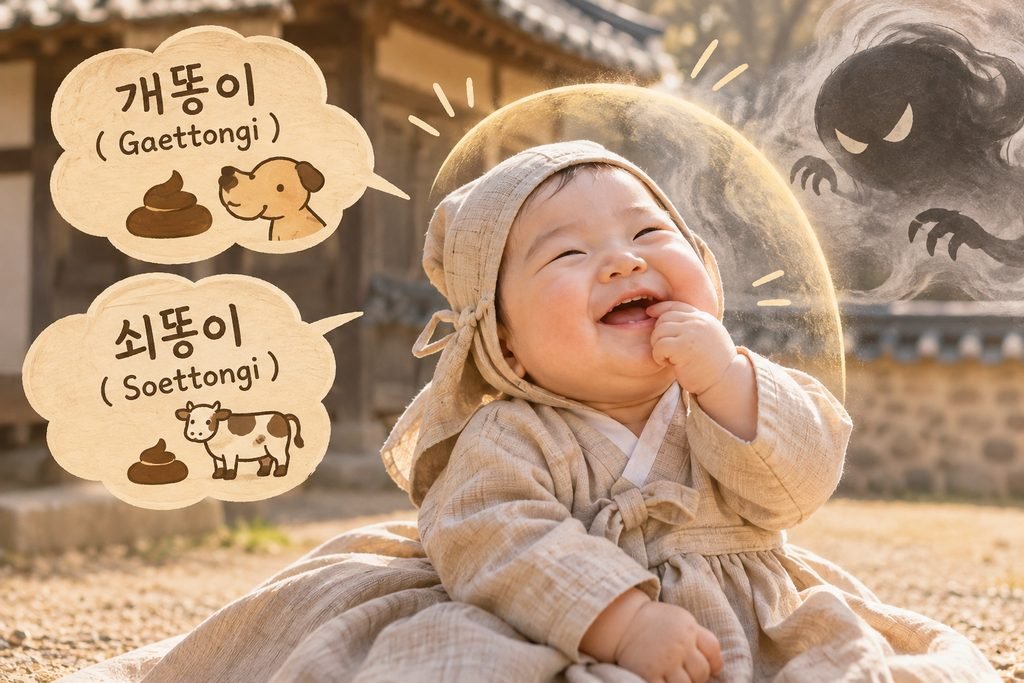
There is another fascinating tradition in Korean child-rearing culture that may seem unusual today: giving babies deliberately ordinary or even unflattering nicknames.
In the past, some families called their babies names such as Gaettongi (개똥이), which roughly translates to “Dog Poop,” or Soettongi (쇠똥이), meaning “Cow Dung.”
These were examples of a-myeong (아명), or childhood names used before a child received or began using their formal name.
Why would parents give such names to their precious babies?
The practice was rooted in an old folk belief that showing too much affection or admiration for a child could attract the jealousy of harmful spirits or supernatural beings, potentially bringing misfortune to the baby.
Parents therefore sometimes avoided praising their children too openly. They might even call a beautiful baby ugly or give them an intentionally humble nickname, believing that this would trick harmful spirits into overlooking the child.
It was not because parents loved their children any less. Quite the opposite: they considered their babies so precious that they wanted to keep that love hidden from anything that might harm them.
This did not mean that babies were always left without names. In traditional Korean society, childhood nicknames (a-myeong) and formal names (gwan-myeong) could serve different purposes. Some families used a humble childhood name first and gave the child a formal name later. Historical accounts also describe customs in which a formal name was not given until the child was at least two years old.
Interestingly, similar beliefs can be found in many other parts of the world. In several cultures, people have believed that excessive praise or admiration could attract envy and bring misfortune. One well-known example is the concept of the Evil Eye, a traditional belief found in parts of the Mediterranean, the Middle East, and elsewhere.
The old Korean custom of giving babies humble nicknames reflects a similar desire: protecting a beloved child from jealousy, harmful attention, and bad luck.
2. What Happens at a Korean First Birthday Party?
Traditional Doljanchi celebrations include several special elements. While the details vary from family to family, some of the most recognizable features are the baby’s special outfit, the birthday table, family gatherings, and traditional activities.
① A Special Outfit for the Birthday Baby: Dolbok
One of the most eye-catching parts of Doljanchi is the baby’s outfit.
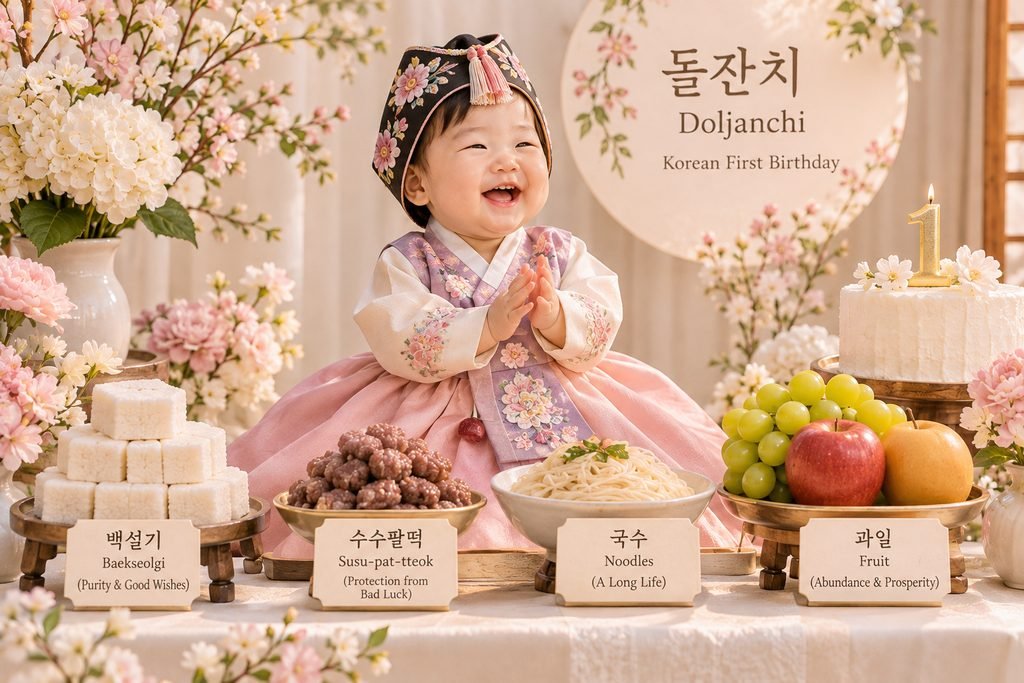
Traditionally, babies wear a special type of Korean traditional clothing called dolbok (돌복), a form of hanbok prepared especially for their first birthday.
These outfits are often colorful and beautifully decorated with traditional patterns and embroidery. They may also include traditional accessories such as hats and decorative pouches.
The clothing is more than just a beautiful costume. It expresses the family’s wishes for the baby’s health, happiness, and good fortune.
Today, many parents choose modern birthday dresses, suits, or specially designed party outfits instead of traditional hanbok. Some babies even change outfits several times during the celebration to capture different looks in their photographs!
② The Dol Table: A Special Birthday Table
Another essential part of Doljanchi is the dolsang (돌상), a specially prepared table for the birthday baby.
Traditionally, the table is decorated with various foods, fruits, and rice cakes, each carrying a special meaning.
Some of the most traditional items include:
- Baekseolgi (백설기): White steamed rice cake symbolizing purity and good wishes.
- Susu-pat-tteok (수수팥떡): Rice cakes made with sorghum and red beans, traditionally believed to ward off bad luck and protect the baby.
- Noodles: Their long shape symbolizes a wish for a long and healthy life.
- Fruit: Representing abundance, prosperity, and a fruitful future.
These foods are not simply decorations. Each item carries the family’s hopes and wishes for the baby’s health and happiness.
Today, traditional foods are often combined with modern decorations such as flowers, personalized signs, and beautifully designed backdrops to create an elegant birthday table.
③ Celebrating with Family and Friends
Doljanchi is also an occasion for family members to come together and celebrate the baby’s first birthday.
In the past, families often invited relatives and neighbors to share food and join the celebration. There was also a tradition of sharing rice cakes with neighbors, symbolizing the sharing of good fortune and happiness.
Today, celebrations range from small gatherings with immediate family and close relatives to larger events attended by friends and other guests.
Guests usually enjoy a meal together, take photographs, admire the baby’s growth, and offer their congratulations to the family.
④ The Highlight of Doljanchi: Doljabi
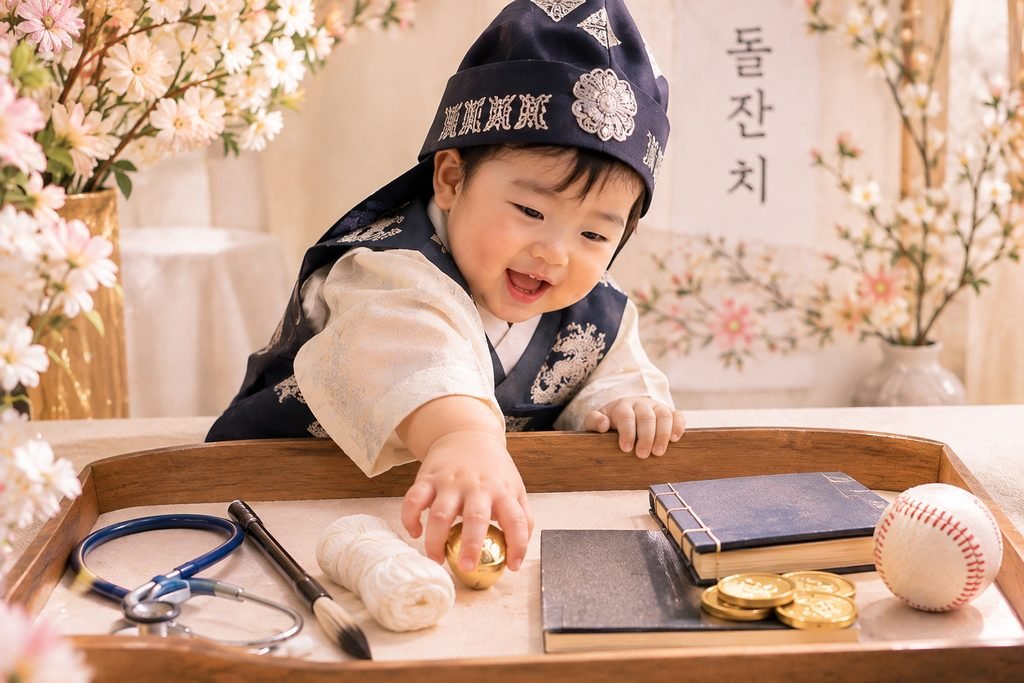
One of the most exciting moments of a Korean first birthday celebration is Doljabi (돌잡이).
Doljabi is a traditional activity in which several objects are placed in front of the baby, who is encouraged to pick one. The object the baby chooses is believed, in a playful traditional sense, to offer a glimpse into their future career, talents, or fortune.
For example, thread traditionally symbolizes longevity, money represents wealth, and a pencil is associated with education and academic success.
Today, modern objects such as stethoscopes, microphones, and golf balls are also commonly included.
What does each object represent, and why do Korean families get so excited about the baby’s choice?
We’ll explore this fascinating tradition in more detail in our next article.
3. How Have Korean First Birthday Celebrations Changed?
Although the way Doljanchi is celebrated has changed over time, its original meaning remains the same: celebrating a baby’s first birthday and wishing them a healthy and happy future.
In the past, when infant mortality rates were much higher, simply reaching the age of one was considered a tremendous blessing. As medical care improved and more babies were able to grow up healthy, the meaning of the celebration gradually evolved.
While the traditional emphasis was on survival and longevity, modern Doljanchi celebrations focus more on commemorating the baby’s first year and creating special family memories.
The size and style of these celebrations have also changed over the years.
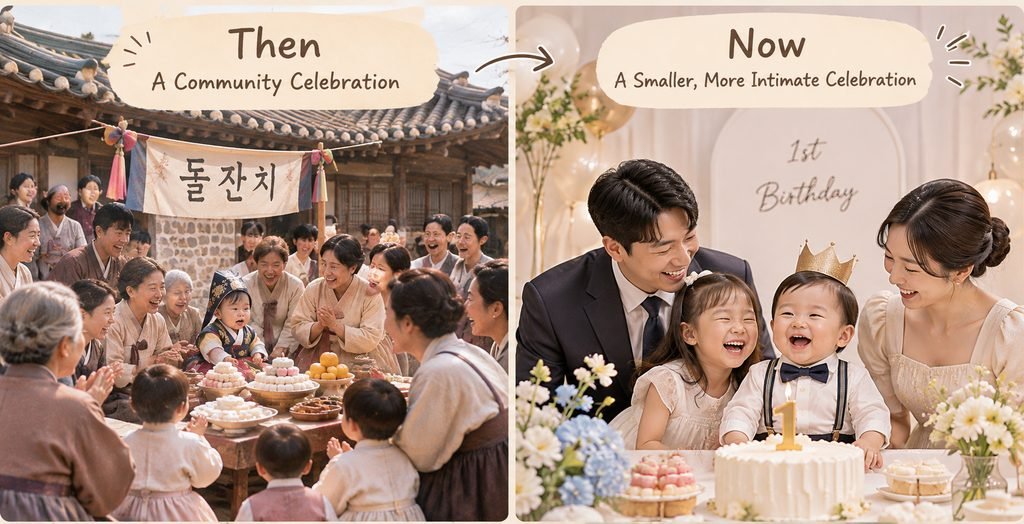
From Neighborhood Celebrations to Family Gatherings
In the past, families often prepared food at home and invited relatives and neighbors to celebrate together. Doljanchi was very much a community event where people shared food and celebrated the baby’s first year.
As lifestyles and economic circumstances changed, more families began holding celebrations at hotels, banquet halls, and specialized first-birthday venues. It also became common to invite not only family members but also friends, colleagues, and other guests.
However, in recent years, smaller and more intimate celebrations have become increasingly popular.
The COVID-19 pandemic played a part in this change. As people became more cautious about large gatherings and face-to-face events, many families began choosing simpler celebrations attended only by immediate family members.
For some parents, a quiet family meal or a professional photo session became a meaningful way to celebrate their baby’s first birthday without organizing a large event.
Even after the pandemic, this preference for smaller gatherings has continued alongside the return of medium-sized and larger celebrations.
Today, there is no single standard way to celebrate Doljanchi. Families choose a style that suits their preferences, budgets, and lifestyles.
Where Do Korean Families Celebrate Doljanchi Today?
Modern Doljanchi celebrations take place in a variety of venues.
- Specialized first-birthday venues: Event spaces designed specifically for Doljanchi, often offering decorations, photography areas, and event planning services.
- Hotels and banquet halls: Popular choices for families who prefer a more formal celebration.
- Restaurants: A convenient option for combining a birthday celebration with a family meal.
- At home: Ideal for families who prefer a quiet and intimate gathering.
Many parents also personalize their celebrations with professional photography, custom-designed birthday tables, floral decorations, and specially made birthday cakes.
Some families begin planning several months in advance, especially when they want to reserve a popular venue or arrange professional photography.
However, there is no single right way to celebrate Doljanchi. Whether it is a grand event or a simple family meal, what matters most is celebrating the baby’s first birthday together.
4. Why Is Doljanchi Still Meaningful to Korean Families?
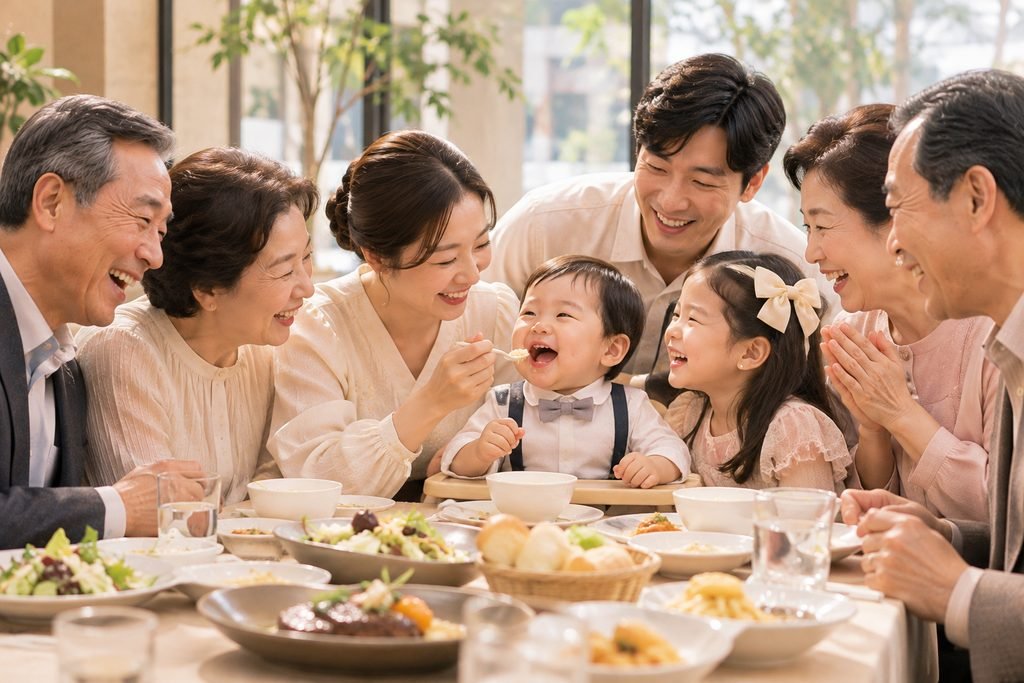
A baby’s first birthday is a once-in-a-lifetime milestone.
For Korean parents, Doljanchi is about much more than celebrating the fact that their child has turned one. It is also a chance to look back on their first year of parenthood and remember all the special moments along the way.
From sleepless nights and the baby’s first smile to those exciting first attempts at rolling over and crawling, the first year is filled with countless changes and discoveries.
Doljanchi brings family members together to celebrate these memories and express their hopes for the child’s future.
It is a beautiful example of how Korean traditions bring together family, food, and important milestones in life.
With its traditional dishes, special outfits, and heartfelt family celebrations, Doljanchi remains one of the most memorable occasions in Korean family culture.
What’s Next? What Do Doljabi and Gold Rings Mean?
Now that you know what a Korean Doljanchi celebration looks like, it’s time to take a closer look at one of its most fascinating traditions: Doljabi.
In our next post, we’ll explore the origins of Doljabi and the meanings behind the objects placed in front of the baby. We’ll look at traditional items such as thread, money, and pencils, as well as modern additions like stethoscopes, and discover how this tradition has evolved over time.
We’ll also introduce another beloved Korean first-birthday custom: giving gold rings to babies.
Why are gold rings such a popular first-birthday gift in Korea, and what makes them so special?
Stay tuned for the next part of our Korean First Birthday Series!
Leave a Reply